
Pruning
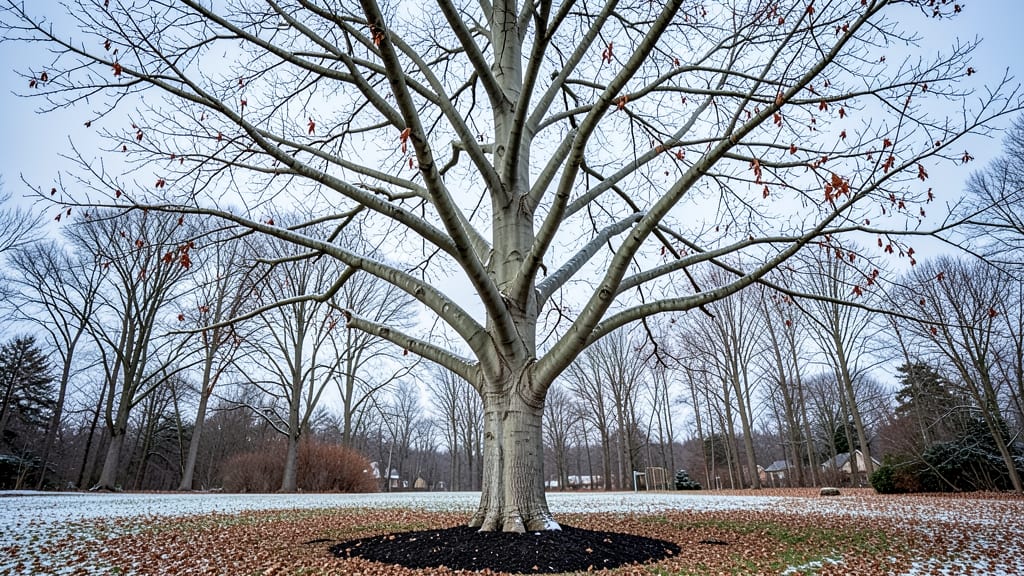
Winter pruning your sugar maple tree when it's dormant can double next spring's growth—if you do it right. ✂️ I learned the hard way that cutting at the wrong time or wrong way stresses the tree, leaving it vulnerable to cold.
But with the right cuts, you'll encourage strong new branches and better sap flow for future syrup-making potential.
The best time is late winter, after the worst cold snaps but before buds swell—typically February to early March in most zones. You'll need sharp pruning shears, a ladder (for higher branches), and a bucket to collect the cuttings.
Focus on removing dead, diseased, or crossing branches first, then thin out crowded growth to improve airflow and sunlight penetration.
What you'll end up with is a tree that wakes up in spring with stronger structure and fewer weak limbs. The bark's winter texture—deep grooves and silvery lichen—will look even more striking after proper pruning. Plus, you'll reduce the risk of storm damage by removing weak branches before wind season.
This method works for both young saplings and mature trees, though larger specimens may need professional help. The key is patience—winter pruning pays off over years, not weeks. Ready to give it a try?
📚 In This Guide
- What you need
- Instructions
- Tips and common mistakes
- Wrapping up and next steps
What you need
- ● Pruning shears: Bypass pruners (for cuts up to ½ inch in diameter) – sharp and clean (e.g., Felco F-2 or Corona Tools).
- ● Loppers: 1 pair (for cuts ½ to 2 inches in diameter) – long-handled for reach (e.g., Fiskars X27).
- ● Pruning saw: 1 (for branches 2+ inches thick) – curved blade for precision (e.g., Bahco Laplander).
- ● Gloves: 1 pair of cut-resistant, insulated gloves (e.g., Mechanix Wear or Wagners) – protects from thorns and cold.
- ● Safety glasses: 1 pair – shatterproof lenses (e.g., Oakley or DeWalt).
- ● Ladder: 1 sturdy, extension ladder (20–30 ft, aluminum or fiberglass) – weight-rated for your height.
- ○ Pruning sealant: 1 small bottle (e.g., Tanglefoot Tree Wound Pruning Seal) – optional but helpful for large cuts.
- ● Disinfectant: 1 bottle (70% isopropyl alcohol or bleach solution) – clean tools between cuts.
- ● Heavy-duty trash bags: 2–3 (for debris disposal).
- ● Temperature: Prune on dry, above-freezing days (ideally 40–60°F). Avoid windy or icy conditions.
- ● Tools: Keep pruners/loppers in a dry, insulated bag if working in cold snaps.
- ● Tree condition: Prune dormant sugar maples (late winter, before buds swell).
- ● 💡 Sharpen tools first! Dull blades tear wood, inviting disease. Use a file or sharpening stone.
- ● 🎯 Mark your cuts: Use chalk or tape to outline branch collars before cutting.
- ● 🌡️ Warm up tools: Rub pruners with your hands for 30 seconds in cold weather to prevent sap freezing.
Step-by-step guide to pruning sugar maple trees in winter
Winter’s dormant season is the perfect time to shape your sugar maple—here’s how to do it right.
🌿 Step 1: Inspect the Tree for Winter Damage and Dead Branches
Start by walking around the tree and scanning the canopy from all angles. Look for branches that are completely bare, cracked, or showing signs of disease like oozing sap or fungal growth. These are your first targets—they’re dead weight and won’t regrow. I always use a pair of sharp pruning shears (not loppers yet) to test branches: if they snap cleanly when bent, they’re dead. If they bend slightly before breaking, they’re still alive.
Focus on branches that are thinner than your wrist—these are easier to remove and less likely to leave unsightly stubs. Mark the branches you want to remove with a piece of colored tape or a spray paint dot. This helps you stay organized, especially if you’re working on a large tree. Winter’s crisp air makes it easier to spot these issues against the bare branches.
✂️ Step 2: Remove Dead, Diseased, and Crossing Branches First
Grab your pruning shears or loppers (for branches up to 2 inches thick) and make your first cuts. Always cut just outside the branch collar—the swollen area where the branch meets the trunk. This ensures the tree can seal the wound properly. For larger branches (over 2 inches), use a pruning saw and make the cut on the underside of the branch, angled slightly away from the trunk.
Remove any branches that are rubbing against each other or growing directly inward—they’ll eventually damage each other or the trunk. I like to step back every few cuts to visualize the tree’s shape. Sugar maples have beautiful, rounded canopies, so aim to maintain that natural form. If you’re unsure about a cut, wait until spring to reassess—better to leave a branch than to over-prune.
☀️ Step 3: Thin the Canopy for Better Light and Airflow
Now’s the time to focus on thinning the canopy to let sunlight reach the inner branches. Select branches that are growing too close together or blocking light from the center of the tree. Your goal is to remove about 20-25% of the canopy—no more, or you’ll stress the tree. Start at the outer edges and work your way inward, always cutting back to a lateral branch or the branch collar.
Look for branches that are growing straight up or down—they’re less structurally sound and can be removed to encourage a more balanced shape. Avoid cutting more than 25% of the tree’s total height in one season. Sugar maples are resilient, but they don’t respond well to aggressive pruning. If you’re unsure about the height rule, err on the side of caution and leave a few extra branches.
⏰ Step 4: Clean Up and Apply Wound Dressing (If Needed)
After making all your cuts, gather the debris and remove it from the area to prevent disease and pests from taking hold. I like to use a pruning saw to make clean cuts on larger branches, then dispose of the wood properly—don’t leave it piled under the tree. For wounds larger than 4 inches in diameter, you can apply a wound dressing (like pruning sealant) to help protect the tree, but many experts argue that letting the tree seal its own wounds is better.
Finally, give the base of the tree a quick inspection. Remove any low-hanging branches that could interfere with lawn equipment or become tripping hazards. Step back and admire your work—you’ve just given your sugar maple a fresh start for spring. Water the tree lightly if the ground is frozen, but avoid overwatering, as the roots are dormant and won’t absorb much.
Tips & tricks for pruning sugar maple trees in winter
Winter reveals the truth about your tree—here's how to make the most of it.
Timing is Everything: Prune during the dormant season (late winter to early spring) when the tree isn't actively growing. This minimizes stress and reduces the risk of disease. I always aim for late January to early February when temperatures are consistently below freezing at night but above freezing during the day. This balance gives the tree time to heal before new growth begins in spring.
Tool Selection Matters: Use the right tool for the job—sharp pruning shears for branches up to ½ inch thick, loppers for branches up to 2 inches, and a pruning saw for anything larger. I keep a small sharpening stone in my tool bag to maintain sharp edges. Dull tools crush branches instead of making clean cuts, which can damage the tree. Always clean your tools with rubbing alcohol between cuts to prevent disease spread.
Visualize the Final Shape: Before making any cuts, step back and visualize the tree's final shape. Sugar maples naturally grow with a rounded canopy, so work with that shape rather than against it. I like to sketch a rough outline on paper first—this helps me stay organized and ensures I don't remove too much foliage at once. Remember, you can always remove more branches in future years, but you can't put them back!
Safety First: Wear gloves and safety glasses when pruning—branches can be heavy and sharp. I also recommend wearing sturdy boots with good traction, especially if you're working on a slope or uneven ground. If you're using a ladder, make sure it's stable and positioned on level ground. Never stand on the top rung of a ladder—it's designed to be the highest point you can safely reach, not stand on.
Pro Tips for Sugar Maple Tree In Winter
- Winter reveals the truth about your tree—here's how to make the most of it.
- Timing is Everything: Prune during the dormant season (late winter to early spring) when the tree isn't actively growing.
- Tool Selection Matters: Use the right tool for the job—sharp pruning shears for branches up to ½ inch thick, loppers for branches up to 2 inches, and a pruning saw for anything larger.
Frequently asked questions
Got questions about pruning your sugar maple tree in winter? You’re not alone! Here are answers to the most common concerns—so you can tackle the job with confidence.
When is the exact best time to prune a sugar maple in winter?
The ideal window is late winter, after the tree has fully dormant but before new buds swell—typically February to early March in most U.S. zones. Avoid pruning during extreme cold snaps (below 10°F) or when sap is actively flowing (late winter/early spring).
Will pruning in winter harm my sugar maple tree?
No—if done correctly! Winter pruning is safer because the tree isn’t actively growing, reducing stress and disease risk. Just avoid heavy cuts (over 25% of the canopy) in one season. Pro tip: Focus on removing dead, diseased, or crossing branches first to minimize shock.
How do I know if I’m making the right cuts?
Follow the 3-cut method for clean wounds:
- Under-cut 6–12 inches below the branch collar (at a 45° angle).
- Top-cut just outside the branch collar.
- Final cut to remove the branch stub, leaving the collar intact.
Never leave stubs—they invite decay. Use sharp tools and seal cuts only if the tree is severely damaged (e.g., storm breaks).
Can I prune a young sugar maple the same way?
Young trees (under 10 years) need gentler pruning—focus on shaping and removing only dead or weak branches. Avoid heavy cuts; prioritize structural balance to guide growth. For saplings, limit pruning to 10–15% of the canopy per year. Wait until the tree is 3–5 years old for major structural work.
What should I never do when pruning a sugar maple in winter?
Avoid these common mistakes:
- Topping (cutting back to a stub)—it invites disease and weak growth.
- Pruning during active sap flow (late winter/early spring)—it stresses the tree.
- Using dull tools—tear wounds slow healing and attract pests.
- Over-pruning—never remove more than 25% of the canopy in one season.
When in doubt, consult a certified arborist for large or mature trees!
Wrapping up and next steps
Winter is the perfect time to give your sugar maple tree a little TLC—pruning now sets the stage for vibrant spring growth and long-term health. 🌿 By following strategic cuts, removing deadwood, and shaping with care, you’re not just trimming branches; you’re investing in a stronger, more resilient tree for years to come.
Ready to take action? Grab your tools, lace up your boots, and step outside—your sugar maple’s future starts with your expert touch. Start small, observe often, and watch your tree thrive!