
Trees
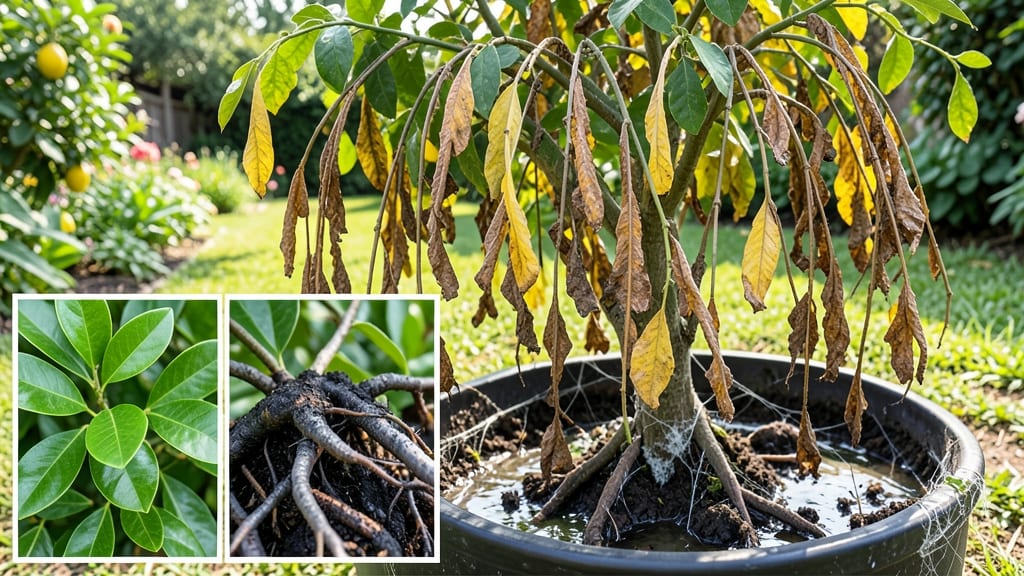
What does an overwatered lemon tree look like? It reveals itself through drooping leaves that feel soft and mushy when touched—like a sad, waterlogged sponge. 🌿 I’ve seen this too many times: bright yellow leaves that curl at the edges, stems that wilt even when the soil’s damp, and a pungent, sour smell clinging to the roots. The problem starts when roots suffocate in soggy soil, cutting off oxygen and inviting rot. The soil itself gives it away—staying clumpier than a wet paper towel and smelling like a swamp. Stick your finger in: if it feels like you’re squeezing a sponge, that’s your warning. Even the bark can darken or develop black spots where moisture lingers. These aren’t just cosmetic issues; they’re a silent scream for help before the tree’s health spirals. What you’ll fix first is the watering schedule—lemon trees need deep but infrequent drinks, not daily sips. Amend the soil with perlite or sand to help it drain faster, and consider repotting if the current container traps moisture. Within weeks, you’ll see leaves perk up again, and the roots will breathe easier. This works for potted lemon trees or those in-ground, though in-ground plants need extra attention to soil composition. The key is balance: let the top inch of soil dry out between waterings, and watch your tree bounce back from the brink.
Root Causes Of Overwatering
When your lemon tree starts looking sad—with droopy leaves, yellowing foliage, or even mushy roots—it’s often a cry for help from too much water. But why does this happen?
Overwatering isn’t just about pouring too much H₂O into the pot; it’s a chain reaction triggered by environmental, soil, and even human factors. Let’s break down the science behind the soggy soil.
Lemon trees hate sitting in wet feet. If your pot lacks drainage holes or the soil is compacted (like clay-heavy mixes), water pools at the roots instead of draining away.
This creates an anaerobic environment—where oxygen is scarce—because roots need air to breathe just as much as they need water.
- Science behind it: Roots rely on aeration (air pockets in soil) for respiration. When soil stays soggy, roots suffocate, leading to root rot (a fungal infection from Phytophthora or Pythium).
- Actionable fix: Use well-draining soil mixes (50% potting soil, 30% perlite/pumice, 20% compost) and terracotta pots (they wick away moisture faster than plastic).
- Pro tip: Test drainage by filling a saucer under the pot—if water sits for more than 30 minutes, your setup is too restrictive. 💡
Most gardeners water on a schedule (e.g., "every Tuesday"), but lemon trees drink based on soil moisture, not calendars. If you water without checking—especially in humid climates or during rainy seasons—you’re drowning the roots.
- Science behind it: Lemon trees (a Citrus species) prefer 60-70% soil moisture but cannot tolerate waterlogged conditions. Overwatering forces roots to consume oxygen from the soil, but when pores fill with water, they drown.
- Actionable fix: Use the finger test: Stick your index finger 2 inches into the soil. If it’s damp, wait. If dry, water until it runs out the drainage holes.
- Pro tip: In humid weather, reduce watering by 30-50%—excess moisture lingers longer. 🌡️
A pot that’s too large or made of non-porous materials (like sealed plastic) turns your lemon tree’s home into a swamp. Big pots retain moisture longer, and plastic traps heat, accelerating evaporation loss from leaves—but the roots still suffocate.
- Science behind it: Lemon trees thrive in root-bound conditions but not waterlogged ones. A pot that’s too big (e.g., 3+ gallons for a young tree) means the soil stays wet for weeks, while plastic pots don’t breathe.
- Actionable fix:
- Use pots 1-2 inches larger in diameter than the root ball.
- Opt for terracotta or fabric pots (they allow evaporation and root pruning).
- Add a layer of gravel at the bottom for extra drainage. ⏰
If your lemon tree is outside during high humidity or frequent rain, the soil stays wet longer than it should. Humid air slows evaporation, so water lingers in the pot, while rain adds extra moisture the tree doesn’t need.
- Science behind it: In humid climates (60%+ relative humidity), soil can take 3-5 days to dry between waterings. If you water on a fixed schedule, you’re over-saturating the roots.
- Actionable fix:
- Move potted trees to a covered patio or under eaves during rain.
- Use a moisture meter to guide watering (aim for 40-60% moisture).
- In humid zones, water only when the top 1-2 inches of soil are bone-dry. ✨
Overwatering is rarely just one factor—it’s usually a mix of poor drainage, inconsistent watering, and environmental conditions. The good news? Once you identify the root cause (pun intended), fixing it is straightforward. Next, we’ll cover how to revive a waterlogged lemon tree before the damage becomes permanent.
How to Fix Your Lemon Tree
Now that you’ve spotted the signs of an overwatered lemon tree—drooping leaves, yellowing foliage, or even mushy roots—it’s time to take action! The good news? With a few simple adjustments, you can nurse your tree back to health and prevent future waterlogging.
Let’s break down the fixes based on the root cause (pun intended) and share some pro tips to keep your citrus tree thriving.
---
If your lemon tree’s leaves are turning yellow or brown and feel soft or mushy, it’s likely suffering from root rot due to excess moisture. Here’s how to revive it:
#### 1. Stop Watering Immediately 🚰 Action: Pause watering for at least 5–7 days to allow the soil to dry out.
If the top 1–2 inches of soil are still damp, wait longer. 💡 Pro Tip: Stick your finger 2 inches deep into the soil—if it’s soggy, hold off on watering.
#### 2. Improve Drainage 🌱 Action: - Repot the tree (if in a container) into a pot with drainage holes and fresh, well-draining potting mix.
Avoid heavy garden soil—opt for a citrus-specific mix or blend cactus/succulent soil with perlite. - Add organic matter: Mix in compost or coconut coir to improve aeration. - Raise the pot: Place it on elevated feet or a drip tray to prevent water pooling.
#### 3. Trim Damaged Leaves & Roots ✂️ Action: - Prune yellow/brown leaves with sterilized scissors to redirect energy to healthy growth. - Check the roots: If repotting, gently inspect for black, mushy roots (signs of rot).
Trim these away with clean pruners and dust the cuts with cinnamon or fungicide to prevent infection.
#### 4.
Water Smarter 💧 Action: - Water deeply but infrequently: Wait until the top 2–3 inches of soil are dry before watering again. - Use the “soak-and-dry” method: Water thoroughly until it drains from the bottom, then let excess water escape completely. - Avoid overhead watering: Water at the base of the tree to prevent fungal growth on leaves.
---
If your lemon tree’s roots are soft, dark, or smelly, root rot has set in. Don’t panic—you can still save it!
#### 1.
Root Pruning & Repotting 🌿 Action: - Remove the tree from its pot and rinse the roots gently with water to wash away excess soil. - Trim affected roots with a sterilized knife, cutting back to firm, white roots (healthy roots should be crisp, not mushy). - Repot in fresh, sterile soil (avoid reusing old soil—it may harbor fungi).
#### 2. Fungal Treatment (If Needed) 💊 Action: - Apply a fungicide (like copper fungicide or hydrogen peroxide solution) to the roots before repotting. - Sprinkle cinnamon or sulfur powder around the base to deter fungal growth.
#### 3. Adjust Watering & Humidity 🌡️ Action: - Reduce humidity around the tree—root rot thrives in damp conditions. Use a fan to improve air circulation. - Avoid saucers under pots unless they’re emptied within 30 minutes of watering.
---
Once your lemon tree is on the mend, keep it happy with these long-term fixes:
| Problem | Solution | Prevention Tip | |---------------------------|------------------------------------------------------------------------------|------------------------------------------------------------------------------------| | Poor drainage | Use pots with multiple drainage holes and well-draining soil. | Test your soil: If water pools after 10 minutes, it’s too dense. | | Inconsistent watering | Stick to a schedule (e.g., every 7–10 days in summer, less in winter). | Group plants by water needs—lemon trees hate soggy soil! | | Compacted soil | Mix in perlite, sand, or orchid bark to improve aeration. | Fluff the soil every few months with a fork. | | No drainage system | Elevate pots or use self-watering pots with overflow drains. | Never let trees sit in saucers—empty excess water quickly. |
---
- First 1–2 weeks: Your tree may look worse before it gets better—drooping leaves may stay as it adjusts. - 3–4 weeks: New growth should appear, and yellow leaves will fall off. - 2–3 months: With proper care, your lemon tree should bounce back with vibrant green leaves and steady growth.
💡 Final Pro Tip: Mulch lightly (with straw or wood chips) to retain just enough moisture without suffocating roots.
--- By following these steps, your lemon tree will be back on track to producing juicy, fragrant lemons in no time! 🍋✨ Just remember: when in doubt, let it dry out—lemon trees prefer a little thirst to too much love (in water form).
Frequently asked questions
How can I tell if my lemon tree is overwatered vs. underwatered?
Overwatered trees have soft, mushy leaves that droop even when soil is damp, while underwatered trees have crispy, dry edges and pull away from the stem. Check the soil: overwatered pots feel heavy and stay clumpy, while underwatered soil is bone-dry. Also, overwatered roots smell sour and turn black.
Will my lemon tree recover from root rot caused by overwatering?
Yes, but you must act fast! Trim the black, mushy roots, repot in fresh well-draining soil, and stop watering for 5-7 days. Use a fungicide if rot is severe, and place the tree in bright, indirect light. Recovery takes 3-4 weeks if caught early.
Can I save my lemon tree if the leaves are already yellow and falling off?
Yellow leaves mean the tree is stressed but not dead. Prune the damaged leaves, improve drainage, and adjust to deep watering every 7-10 days. New growth should appear in 2-3 weeks. Avoid fertilizing until the tree shows signs of recovery.
What’s the best soil mix to prevent overwatering?
Use a blend of 50% potting soil, 30% perlite or pumice, and 20% compost. This creates air pockets to prevent soggy roots. For potted trees, add a gravel layer at the bottom of the pot to improve drainage.
How often should I water my lemon tree in summer vs. winter?
In summer, water when the top 2 inches of soil are dry (about every 5-7 days). In winter, reduce to every 10-14 days since growth slows. Always check soil moisture—lemon trees hate soggy roots but also need consistent hydration.