
Pruning
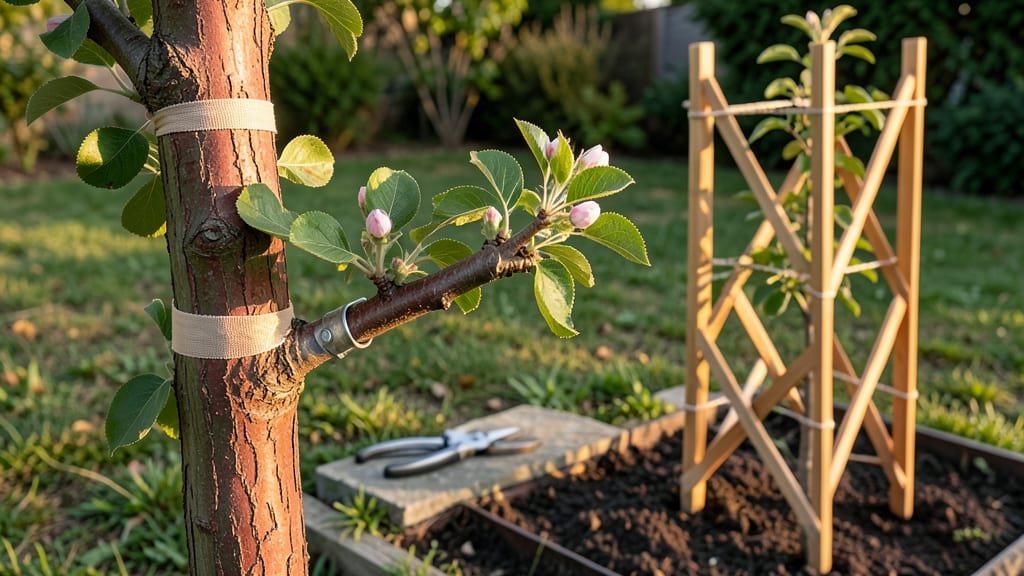
Apple tree branch support isn't just about preventing broken limbs—it's about shaping a tree that will bear fruit for decades. 🌳 I've seen young trees with heavy branches sagging under their own weight, and without proper support, they struggle to grow straight and strong.
The right technique redirects energy into upward growth and better sunlight exposure, which means more apples and fewer structural headaches down the road.
You don't need fancy equipment—just basic materials like wooden stakes, tree ties, or spreaders that you can find at any garden center. For young trees, a simple stake-and-tie system works wonders, while mature branches might need cabling or even a spreader to gently redirect their growth.
The key is timing: install support when branches are still flexible, usually in late winter or early spring before new growth begins.
With the right support, your tree will grow taller and straighter, with branches reaching for the sun instead of drooping. You'll notice stronger wood that can handle heavier fruit loads, and a more open canopy that lets sunlight reach every branch.
Plus, fewer broken limbs means less cleanup and more time enjoying your harvest.
Works for both newly planted trees and established ones needing correction. The same principles apply whether you're working with a dwarf variety in your backyard or a standard tree in an orchard setting. Let's get those branches growing the way they should!
📚 In This Guide
- What you need
- Instructions
- Tips and common mistakes
- Wrapping up and next steps
What you need
- ● Support Stakes: 1–2 galvanized metal or wooden stakes per tree (4–6 ft tall, ½–1 inch thick).
- ● Tree Ties: 3–5 soft, flexible ties (e.g., Tree Tape or Jute Wrapping) to avoid girdling.
- ● Spreaders: 2–3 adjustable spreaders (e.g., V-shaped or cross-brace designs) for wide branches.
- ● Strong Twine or Zip Ties: 1–2 rolls of biodegradable twine or zip ties for temporary fixes.
- ○ PVC Pipes or Wooden Dowels: (Optional) 2–3 pieces (1–2 inches in diameter) for DIY spreaders.
- ● Hand saw or pruning shears (for trimming excess growth).
- ● Measuring tape (to ensure proper spacing).
- ● Hammer or mallet (for driving stakes into the ground).
- ● Gloves (to protect your hands from splinters or rough bark).
- ● Ladder (if working on taller trees—safety first!).
- ● A young apple tree (under 3–5 years old) with flexible branches.
- ● Well-drained soil (amend with compost if needed for stability).
- ● Clear weather (avoid supporting branches during rain or wind).
- ● Patience! Support should be gradually adjusted as the tree grows.
How to install sturdy apple tree branch supports
Strong branches mean fewer breaks and better fruit production—here’s how to set up supports that last.
🪴 Step 1: Choose the Right Support Materials
For young apple trees, I use 4-6 foot wooden stakes (4x4 posts work best) or metal tree guards for heavier branches. Drive the stakes 6-12 inches deep into the soil at a 45-degree angle—this creates a stable base that won’t wobble when branches lean against it. For mature trees, cable systems with spreader bars are ideal for heavy limbs.
I always check the soil first—if it’s rocky or compacted, I dig a 2-inch wide hole with a post hole digger to ensure the stake sits firmly. The top of the stake should extend 12-18 inches above the branch you’re supporting so you can tie it securely without straining the tree.
✂️ Step 2: Position and Attach Supports to Branches
Start by selecting the main scaffold branches—these are the 3-5 largest limbs growing outward. Tie each one to a stake using soft tree ties (never wire or plastic strips, which can girdle the branch). Position the branch at a 45-60 degree angle from the trunk to encourage strong crotches and prevent future breaks.
I wrap the tie around the branch first, then the stake, leaving room for growth—about 1 inch of space between the branch and the tie. This prevents the tree from getting too constricted as it thickens. For larger branches, I use two ties spaced 6 inches apart to distribute pressure evenly.
💧 Step 3: Secure with Proper Tying Techniques
The key here is gentle pressure—you want to guide the branch, not crush it. I use rubber-coated tree ties because they stretch slightly as the branch grows. Wrap the tie snugly but not tight, leaving a finger’s width of space to slide under it. Over time, the branch will thicken and the tie will loosen naturally.
For branches that need extra guidance, I add a second tie lower down on the stake, about 12 inches below the first. This creates a triangle of support that keeps the branch stable even in wind. Check ties every 6-12 months—if they’re digging into the bark, replace them immediately.
☀️ Step 4: Monitor and Adjust as the Tree Grows
Young apple trees grow fast, so I inspect supports once a month during the first year. If a branch outgrows its tie, I add a spreader bar to distribute weight across multiple stakes. For mature trees, I focus on weight-bearing limbs—these are the ones holding the most fruit and need extra reinforcement.
Watch for leaning or sagging—this means the support isn’t strong enough. If a branch starts to bend under its own weight, I add a second stake on the opposite side and tie it to both. The goal is to mimic the tree’s natural strength, not force it into an unnatural shape.
Tips & tricks for sturdy apple tree branch support
Here's what nobody tells you about keeping your apple tree's branches strong and healthy for years to come.
Material Selection Matters: For young trees, I recommend 4x4 pressure-treated wooden stakes over cheaper alternatives—they last 5-7 years without rotting. If you're working with mature trees, invest in galvanized metal tree guards for branches over 2 inches thick. The 45-degree angle mentioned in Step 1 is critical because it creates a natural triangle of support that mimics how branches grow in nature.
Soil Preparation Secret: Before driving in your stakes, test the soil firmness by pushing a screwdriver into the ground. If it goes in easily, you're good to go. But if it's too rocky or compacted, dig that 2-inch wide hole as mentioned—this prevents stakes from tilting over time. I've seen stakes fail because people skipped this step and planted directly into hardpan soil.
Tying Technique That Saves Trees: When using rubber-coated tree ties in Step 3, here's my pro move: I always make the first wrap around the branch, then the stake, rather than the other way around. This prevents the tie from cutting into the branch as it grows. And that finger-width space? It's not just a suggestion—it's what prevents girdling and allows the branch to expand naturally.
Monitoring System: Set a monthly reminder on your phone for that first-year inspection. I use a simple color-coded system: green sticky note for good ties, yellow for ones that need checking, and red for immediate replacement. This visual system helps me catch problems before they become disasters. For mature trees, focus on those weight-bearing limbs—these are your fruit-producing branches and need the most attention.
Pro Tips for Apple Tree Branch Support
- Here's what nobody tells you about keeping your apple tree's branches strong and healthy for years to come.
- Material Selection Matters: For young trees, I recommend 4x4 pressure-treated wooden stakes over cheaper alternatives...
- Soil Preparation Secret: Before driving in your stakes, test the soil firmness by pushing a screwdriver into the grou...
Frequently asked questions
Got questions about keeping your apple tree branches strong and supported?
Here are answers to the most common ones—so you can grow a sturdy, fruit-bearing tree with confidence!
When is the best time to install branch supports?
The ideal time is late winter or early spring before new growth begins. This gives roots time to stabilize while supports hold branches in place. For young trees, install supports immediately after planting—they’ll need guidance as they grow!
What happens if I don’t use supports for my apple tree?
Without supports, branches can bend, break, or grow unevenly, leading to poor fruit production or even tree damage. Supports encourage straight, sturdy growth and help distribute weight evenly—especially important for heavy apple varieties like Gala or Granny Smith!
How do I know if my current supports are working?
Check for three key signs:
- Branches grow straight up (not sagging or leaning).
- Supports aren’t digging into the bark (adjust ties gently if needed).
- The tree’s center leader (main upward branch) stays dominant.
Can I use stakes, cables, or something else for support?
Yes! Here’s a quick guide:
Support Type
Best For
Pros
Stakes
Young trees (<3 years)
Simple, affordable, and easy to install.
Spreaders
Mature trees with wide canopies
Encourages outward growth; prevents crowding.
Cables/Ties
Heavy branches or storm-prone areas
Flexible, reduces breakage risk.
Pro tip: Always use soft, breathable ties (like tree straps) to avoid bark damage!
My apple tree’s branches are already leaning—can I fix it now?
Yes, but act quickly! Gently tie branches to supports at a 45° angle to encourage upward growth. Avoid pruning too much—focus on gradual adjustments. For severe cases, consult an arborist to avoid stressing the tree.
Wrapping up and next steps
Supporting your apple tree branches isn’t just about aesthetics—it’s an investment in healthier fruit, stronger growth, and longer-lasting trees. 🌳 Whether you’re using stakes, spreaders, or cabling, the right techniques will pay off with plump apples and minimal stress on your tree.
Now that you’re armed with the best methods, roll up your sleeves and give your tree the care it deserves!
Ready to take action? Start by inspecting your tree this weekend—look for branches that need support and gather your materials. Small steps today lead to a bountiful harvest tomorrow! 🍏✨