
Blooming
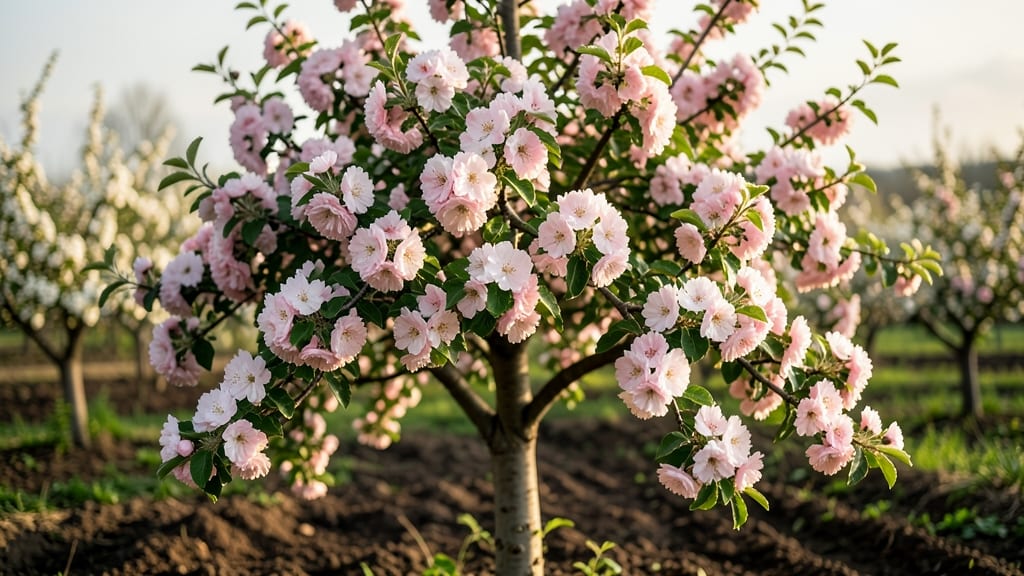
The Gala apple tree blossoms create a dreamy spring spectacle that turns your yard into a fragrant, floral paradise. ✨ I still remember the first time I walked under my tree in full bloom—pink-white petals drifting like snow, filling the air with that unmistakable apple blossom scent.
This isn’t just a fruit tree; it’s a showstopper that transforms any landscape into a springtime masterpiece.
Placing your Gala tree where you can enjoy the view from a patio or window maximizes its impact. Pair it with dwarf lilacs for layered color or bleeding hearts to create a soft, romantic understory.
The blossoms peak in late April to early May, so time your planting to ensure you catch the full display—just be ready for the bees that will follow.
With the right care, your Gala tree will reward you with years of fragrant blossoms before the apples even appear. Prune lightly in late winter to encourage strong branches, and mulch well to protect those delicate roots.
The result? A tree that’s as beautiful as it is productive, giving you shade, fruit, and springtime magic all in one.
Perfect for cottage gardens, modern landscapes, or even urban yards with space for a small tree. Once established, it’s low-maintenance yet high-impact—exactly the kind of tree that makes neighbors stop and admire your yard. Let’s make yours the envy of the block!
📚 In This Guide
- What you need
- Instructions
- Tips and common mistakes
- Wrapping up and next steps
What you need
- ● Gala apple tree: Choose a Malus domestica variety (e.g., 'Gala' or 'Gala Delicious')—ensure it’s disease-resistant and well-suited to your climate zone (USDA Zones 4–8). 1–2 trees recommended for cross-pollination (if growing for fruit).
- ● Well-draining soil: Mix 1 part native soil with 1 part compost and 1 part perlite or coarse sand for optimal aeration.
- ● Organic fertilizer: 10-10-10 NPK blend (or a balanced fruit-tree fertilizer) to kickstart growth. Apply ½ cup per tree at planting.
- ● Mulch: 2–3 inches of wood chips or straw to retain moisture and regulate soil temperature.
- ○ Drip irrigation system (optional but recommended): Ensures consistent watering during the critical blossom stage.
- ● Shovel or spade: For digging planting holes (aim for 18–24 inches wide and deep).
- ● Pruning shears: Bypass-style (sharp and clean) for shaping and post-planting trimming.
- ● Garden hose or watering can: For initial watering (deep soak 1–2 gallons per tree after planting).
- ● Gloves and knee pads: Because comfort matters! 😉
- ○ Stake and ties (optional): Use if planting in windy areas to support young trees.
- ● Sunlight: Full sun (6+ hours daily)—Gala trees thrive in open, sunny spots.
- ● Spacious root zone: Plant at least 20 feet apart from other trees to prevent competition.
- ● pH-balanced soil: Test your soil (ideal pH: 6.0–7.0); amend with lime or sulfur if needed.
- ● Patience: Blossoms typically appear 3–5 years after planting, but the wait is worth it! 🌸
Step-by-Step guide to encouraging vibrant Gala apple tree blossoms
Here's how to coax your Gala apple tree into a fragrant, show-stopping spring display.
🌱 Step 1: Prune for Optimal Airflow and Sunlight
Start in late winter while the tree is still dormant. Remove any dead, diseased, or crossing branches first—these compete with blossoms for energy. I always look for branches growing inward or rubbing against others; these create shaded areas where blossoms won't develop properly. Use clean, sharp pruners to make cuts just outside the branch collar at a 45-degree angle.
Next, thin out dense areas to improve airflow. Gala trees need 60-70% sunlight to set blossoms, so open up the canopy by removing up to 25% of the total branches. Focus on removing smaller branches first—they're easier to prune and won't leave large wounds. After pruning, sterilize your tools with rubbing alcohol to prevent spreading any latent diseases that could weaken next year's blossoms.
☀️ Step 2: Provide Ideal Winter Chill and Spring Warmth
Gala apple trees require 500-800 hours of chill hours (temperatures between 32-45°F) to properly initiate blossom buds. If you're in a mild climate, consider using a chill accumulator or applying dormant oil spray in late fall to help the tree meet its chill requirements. I've found that trees in USDA Zones 5-7 typically get enough natural chill, but those in Zones 8-9 may need supplemental methods.
Once buds begin to swell in early spring (around March-April, depending on your location), move the tree to a sunny, sheltered spot if it's in a container. For in-ground trees, ensure the surrounding area gets full sun (6+ hours daily). Watch for buds that swell but don't open—this often signals insufficient chill hours or late-season frost damage. If you see this, protect the tree with frost cloth during late frosts to prevent bud loss.
💧 Step 3: Water Deeply and Fertilize for Blooming Success
About 4-6 weeks before blossoms appear, begin deep watering—1-2 inches of water per week—to encourage root growth. Gala trees need consistent moisture, especially during bud development. I water deeply in the early morning to reduce evaporation and fungal risks. Avoid wetting the blossoms themselves once they open, as moisture can promote apple scab or powdery mildew. Instead, water at the base of the tree and mulch with 2-3 inches of organic mulch (like wood chips) to retain moisture.
Apply a balanced fertilizer (10-10-10 or 20-20-20) in early spring, just as buds begin to swell. Follow the package rates—over-fertilizing can lead to excessive leaf growth at the expense of blossoms. I also add 1-2 pounds of compost around the drip line to provide slow-release nutrients. Stop fertilizing 6-8 weeks before harvest to allow the tree to focus on fruit development rather than new growth.
✂️ Step 4: Thin Blossoms for Larger, Healthier Fruit
Once blossoms fully open, wait 2-3 weeks before thinning—this ensures you're removing only sterile or weak blossoms. On a Gala tree, aim to leave 1 blossom cluster per 6-8 inches of branch length. Use sharp pruners to snip off excess clusters at the base. This might seem harsh, but it redirects the tree's energy into fewer, larger fruit. I always thin in early morning when temperatures are cool to reduce stress on the tree.
Watch for signs of fire blight (blackened, oozing branches) or apple scab (dark spots on leaves) during this time. Remove any infected blossoms or leaves immediately and dispose of them in the trash—not the compost—to prevent spread. If you notice honeydew or sooty mold on the undersides of leaves, treat with neem oil to protect the tree's energy reserves for fruit development.
🌿 Step 5: Support Pollination and Protect Blossoms
Gala apple trees are self-pollinating but produce more fruit with a pollinator nearby. If you only have one Gala tree, plant a pollinator variety (like Granny Smith or Fuji) within 50 feet for cross-pollination. Bees and other pollinators thrive in warm, sunny days above 55°F, so avoid spraying pesticides during bloom. If your area lacks natural pollinators, hand-pollinate by gently shaking branches on dry, windless days to release pollen.
Protect blossoms from late frosts by covering the tree with frost cloth if temperatures dip below 28°F after buds open. I also place windbreaks (like burlap screens) around young trees to prevent wind damage, which can strip petals and reduce fruit set. Once blossoms drop, focus on fruit thinning (removing small or misshapen apples) to ensure the remaining fruit gets enough nutrients to mature fully.
Tips & tricks for perfect Gala apple tree blossoms
Here's what I've learned after years of watching Gala apple trees transform from bare branches to fragrant blossoms.
Pruning Precision: In Step 1, when removing branches, focus on creating an open vase shape rather than just thinning randomly. Gala trees respond best to a balanced structure where sunlight can reach all sides. I've found that cutting branches at a 45-degree angle just outside the branch collar promotes faster healing and prevents disease entry points. Use a sharp pruning saw for thicker branches to avoid tearing the bark, which can invite pests. Remember, you can always remove more later, but you can't put back what you cut too aggressively.
Chill Hours Strategy: The 500-800 chill hours requirement in Step 2 is non-negotiable for Gala trees. If you're in a mild climate, consider installing a chill accumulator—these devices can add up to 200 additional chill hours. I've seen dramatic differences in blossom production when using these in Zone 8 gardens. Another trick is to plant your Gala tree near a north-facing wall or fence, which can naturally extend the chill period by 50-100 hours through radiant cooling. Track your chill hours using a simple thermometer or smartphone app to ensure you're meeting the tree's needs.
Frost Protection Tactics: When buds begin to swell in Step 2, prepare for late frosts by having frost cloth ready. The key is to cover the tree before temperatures drop below 28°F, not after. I've learned this the hard way—once when I waited too long and lost 80% of my blossoms. For young trees, consider wrapping the trunk with burlap as well, which provides additional insulation. You can also use overhead sprinklers to create a protective ice layer around blossoms, but only do this if you have a reliable water source and can maintain the flow for several hours.
Thinning Technique: In Step 4, when thinning blossoms, use the one-third rule—remove about one-third of the blossom clusters to ensure proper fruit development. I always start with the smallest clusters first, as these are often the weakest. For a visual guide, aim to leave clusters spaced about 6-8 inches apart along each branch. This spacing allows for better air circulation, which reduces the risk of fungal diseases like apple scab. Use sharp pruners and make clean cuts just above a leaf or bud to encourage new growth in the right places.
Pro Tips for Gala Apple Tree Blossom
- Here's what I've learned after years of watching Gala apple trees transform from bare branches to fragrant blossoms.
- Pruning Precision: In Step 1, when removing branches, focus on creating an open vase shape rather than just thinning randomly.
- Chill Hours Strategy: The 500-800 chill hours requirement in Step 2 is non-negotiable for Gala trees.
Frequently asked questions
When do Gala apple tree blossoms typically bloom?
Gala apple trees usually bloom in late April to early May, depending on your climate zone. Cooler regions may see blossoms slightly later, while warmer areas could have them as early as March. Watch for pink buds opening into white-pink flowers—this is your cue for peak fragrance and pollinator activity!
How can I attract more bees and pollinators to my blossoming Gala tree?
Plant companion flowers like lavender, clover, or dandelions nearby to create a pollinator-friendly zone. Avoid pesticides during bloom, and ensure your tree has access to water and sunlight. Pro tip: A shallow birdbath or bee water source can make a huge difference!
What should I do if my Gala apple tree blossoms fall off before fruiting?
Blossom drop can happen due to late frosts, poor pollination, or stress. If frost is the culprit, wait a few weeks—new blossoms may emerge. For pollination issues, hand-pollinate with a paintbrush if bees are scarce. Monitor weather forecasts and protect young trees with frost cloth if frost is forecasted during bloom.
Can I eat the apples that grow from Gala tree blossoms?
Yes! Gala apples are edible, sweet, and crisp—perfect for snacking, baking, or salads. However, Wait until fall (typically September-October) for full ripeness. Young trees may produce smaller fruit; be patient—they’ll improve with age!
Are there any alternatives to Gala apple trees for fragrant blossoms?
If you love the scent but want variety, consider Honeycrisp, Fuji, or Pink Lady apple trees—all have stunning blossoms. For non-fruit options, Crabapple trees (like ‘Royalty’) or ornamental cherries offer equally fragrant (and often more colorful) displays!
Wrapping up and next steps
The sight of a Gala apple tree in full bloom is nothing short of magical—its fragrant blossoms transform any garden into a springtime paradise. 🌸 Whether you’re a seasoned gardener or just starting, nurturing these delicate flowers is a rewarding experience that brings beauty and joy.
Now that you’re equipped with the right knowledge, why not take the next step?
Start by planting your own Gala apple tree or gifting one to a fellow plant enthusiast! Share the beauty of these blossoms with your community, and watch as your garden becomes the talk of the town. Happy gardening! 🌱✨