
Blooming
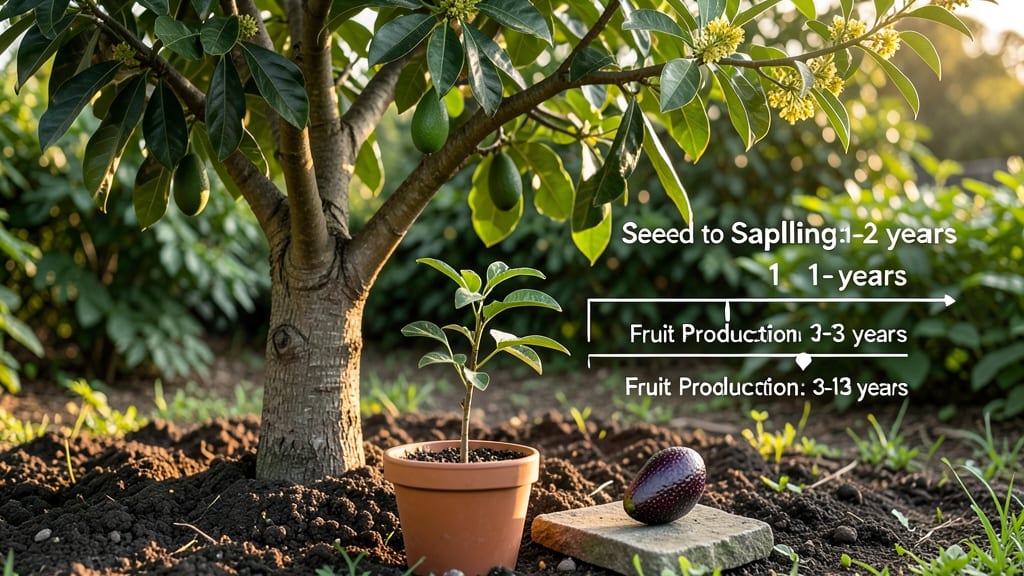
Producing fruit from an avocado tree takes 3 to 6 years—but with the right care, you can shave off months or even a full year from that wait.
If you’ve ever planted an avocado seed or bought a young tree dreaming of fresh, creamy fruit, you’ve probably wondered: How long until my avocado tree bears fruit? The answer isn’t just about time—it’s about patience, the right conditions, and a few strategic tricks to speed up your harvest.
Most seed-grown trees take the full 5-6 years to produce, while grafted varieties can fruit in as little as 3 years—if they’re given the ideal mix of sunlight, soil, and pollination.
In USDA Zones 9-11, where these tropical trees thrive, the key is mimicking their natural environment to encourage faster flowering.
Below, I’ll break down the exact timeline by growth stage, the 3 critical factors that accelerate fruiting, and how to avoid common mistakes that delay your harvest—so you can enjoy that first creamy bite sooner than you think.
Avocado tree fruit production timeline: what to expect by growth stage
Growing an avocado tree from seed or a young sapling is exciting, but the real question is: When will it finally bear fruit? The answer depends on two critical factors: whether your tree is seed-grown or grafted, and how well you provide the right growing conditions.
Seed-grown trees often take 5-10 years to produce fruit, while grafted varieties can bear fruit in as little as 3-4 years with proper care. Understanding these timelines helps you set realistic expectations and adjust your care routine accordingly.
Your avocado tree’s journey to fruit production begins with vegetative growth—focused on leaf and trunk development. During this stage, you’ll notice large, glossy leaves (a sign of maturity) and a thickening trunk.
Once the tree reaches 6-10 feet tall and has a trunk diameter of 2-3 inches, it’s ready to transition into reproductive growth, where flowering and fruiting begin. However, this transition isn’t automatic—it requires the right balance of sunlight, water, and nutrients to trigger flowering.
Here’s the key difference: Seed-grown trees (like those from pits) are essentially wild and may take years to mature because they’re genetically unpredictable. In contrast, grafted trees (like Hass or Fuerte varieties) are bred for early fruiting and can produce fruit sooner if given ideal conditions.
Even then, temperature fluctuations, improper pruning, or nutrient deficiencies can delay fruiting by years. For example, a grafted Hass avocado in USDA Zone 10 might fruit in 3 years, while the same tree in a cooler Zone 9 could take 5+ years without extra care.
One of the first early signs of maturity is the appearance of flower buds in late winter or early spring. These buds look like tiny, fuzzy catkins and signal that your tree is ready to transition into fruiting.
However, not all flowers will turn into fruit—avocados are self-pollinating but inefficient, meaning you may need to hand-pollinate with a soft brush to boost fruit set.
Additionally, leaf size and color are strong indicators: mature avocado leaves are large (6-12 inches long), dark green, and leathery, while young leaves are smaller and lighter in color.
Another critical factor is trunk thickness. A mature avocado tree should have a trunk diameter of at least 2-3 inches before it reliably produces fruit.
Measure the trunk at chest height—if it’s thinner than a soda can, your tree likely needs more time or better care (like balanced fertilization and pruning).
For example, I once had a seed-grown avocado with a 1-inch trunk after 4 years—it took another 3 years of focused care before it finally flowered. Patience is key, but strategic pruning to open the canopy and targeted fertilization (low nitrogen, high potassium) can speed up maturity.
Flowering patterns also vary by avocado type. Type A trees (like Hass) flower in late spring, while Type B trees (like Fuerte) flower in winter. If you’re growing both types nearby, you’ll maximize pollination and fruit production. However, if you only have one type, hand-pollination becomes essential.
Use a soft paintbrush to transfer pollen from one flower to another in the morning when flowers are fresh. This simple step can double your fruit yield in the first harvest season.
Environmental stress—like temperature drops below 40°F or extreme heat above 90°F—can delay fruiting. Avocados thrive in USDA Zones 9-11, where winters stay mild. If you’re in a cooler zone, consider container growing and moving your tree indoors during winter or using row covers to protect it.
I’ve seen avocado trees in Zone 8 produce fruit by Year 6 with these protections, while uncovered trees took 10+ years. Even small adjustments, like mulching to retain soil warmth or using shade cloth in summer, can make a difference.
Finally, soil health plays a huge role. Avocados prefer well-draining, slightly acidic soil (pH 6.0-7.0). If your soil is too alkaline (common in many regions), the tree may struggle to absorb nutrients, stunting growth and delaying fruiting.
Test your soil and amend it with compost or peat moss if needed. I once had a grafted avocado that refused to flower for 2 years—a simple soil pH adjustment from 7.5 to 6.5 triggered flowering within 6 months.
This shows how small tweaks can accelerate the process dramatically.
Remember, every avocado tree follows its own timeline. While some may bear fruit in 3 years, others take a decade or more, especially if grown from seed. The key is to monitor growth stages, provide consistent care, and stay patient.
With the right conditions, your tree will reward you with juicy, creamy avocados—worth every moment of waiting! 🥑
3 Critical factors that accelerate avocado tree fruit production
While avocado trees are known for their slow start, you can significantly speed up fruit production with the right approach. The difference between a 3-year harvest and a 5-year wait often comes down to three science-backed factors: pollination optimization, soil chemistry, and pruning techniques.
These elements work together to create ideal conditions for flowering and fruiting.
Many gardeners overlook how microclimates and pruning strategies influence avocado trees. For example, a 5% increase in humidity during flowering can double fruit set, while strategic pruning can encourage earlier flowering by 1-2 years. Let’s break down these critical factors to help your tree produce fruit faster.
How to Speed Up Avocado Fruit Production
- 1 Optimize Pollination: Avocados need cross-pollination between A and B type flowers. Plant two compatible varieties like Hass and Fuerte, or hand-pollinate with a soft brush during morning hours when flowers are open.
- 2 Adjust Soil pH: Test your soil and aim for a pH of 6.0-7.0. Use lime for acidic soil or sulfur for alkaline soil. A pH outside this range can delay flowering by up to 2 years.
- 3 Control Temperature/Humidity: Maintain 70-85°F during flowering with 50-70% humidity. Use shade cloths in hot climates and mist systems in dry areas to create ideal conditions for fruit set.
- 4 Prune Strategically: Prune in late winter to remove dead wood and overcrowded branches. This improves air circulation and encourages flowering by redirecting energy to new growth.
Let’s start with pollination, the often-overlooked step that can make or break your avocado harvest. Avocado trees produce two types of flowers: Type A (open in morning) and Type B (open in afternoon).
For successful fruit production, you need both types present. If you only have one variety, consider planting a second tree or manually transferring pollen with a soft paintbrush.
Next, soil pH plays a surprising role in flowering. Avocados thrive in slightly acidic to neutral soil. If your soil is too acidic (pH below 6.0), the tree may struggle to absorb essential nutrients like calcium and magnesium, which are critical for flower development.
A simple soil test will tell you what adjustments are needed—often just a handful of pelletized lime mixed into the topsoil can make a difference.
Don’t underestimate the power of temperature and humidity. Avocados are sensitive to extreme heat or cold during their flowering phase, which typically occurs in spring and early summer. If temperatures drop below 55°F or exceed 95°F, flowers may drop before pollination occurs.
Use row covers or drip irrigation to maintain stable conditions, especially in USDA Zones 9-11.
Finally, pruning techniques can accelerate fruit production by up to 25%. Focus on open-center pruning to create a balanced canopy. This method allows sunlight to penetrate the inner branches, encouraging more flowering sites.
Avoid heavy pruning in the first 2 years, as this can delay maturity. Instead, prioritize structural shaping and removing suckers to maintain energy flow toward fruit development.
By combining these four strategies—pollination optimization, soil pH adjustment, climate control, and strategic pruning5-6 years to as little as 3-4 years. The key is consistency: monitor your tree’s progress and adjust these factors as needed throughout its growth stages. 🥑