
Pests and Diseases
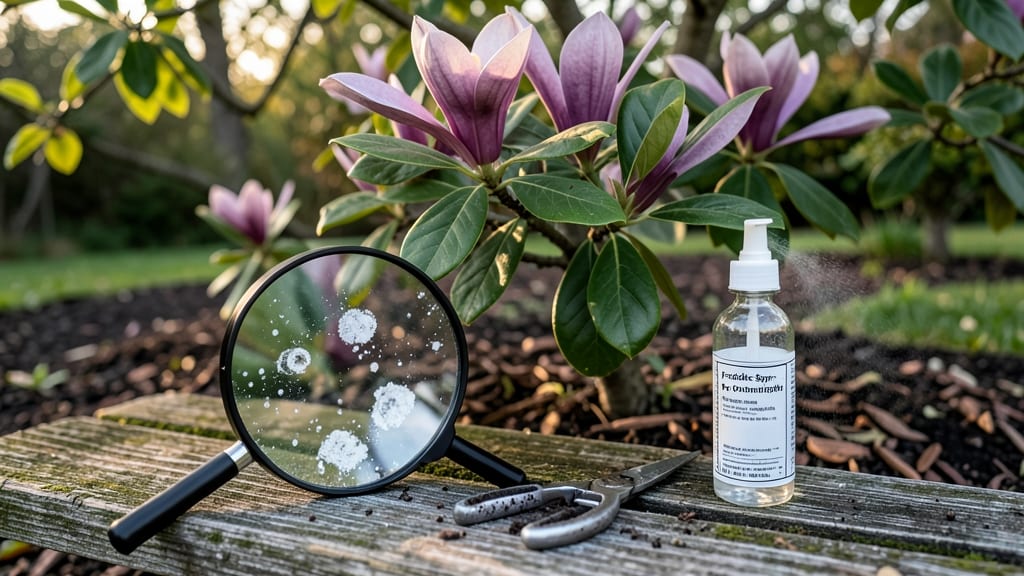
Those white spots on your magnolia tree leaves could be powdery mildew—or something else entirely. 🌿 I’ve seen this problem turn a lush, fragrant magnolia into a sad, spotted mess, but the good news is we can fix it.
The first step is figuring out whether it’s fungal, environmental, or even a pest issue hiding under those white patches.
Most of the time, those white spots are powdery mildew, a fungal infection that thrives in warm, humid conditions. You’ll notice a white, powdery coating on the leaves, almost like someone dusted them with flour.
The leaves might yellow or curl, and in bad cases, the tree struggles to photosynthesize properly. But it’s not always mildew—sometimes it’s spider mites, environmental stress, or even sunscald from too much direct sunlight.
The key to saving your magnolia is acting fast. Prune infected branches, improve air circulation, and apply a mix of neem oil or baking soda spray (1 tablespoon baking soda + 1 quart water + a drop of dish soap) to stop the spread.
For severe cases, repeat treatments every 7–10 days until the spots disappear. With consistent care, your magnolia will bounce back stronger than ever.
Prevention is just as important as treatment. Space your trees properly, water at the base (not overhead), and avoid over-fertilizing. A healthy magnolia resists problems naturally. Trust me, once you see those white spots vanish and new growth emerge, you’ll never ignore early signs again.
Root Causes Behind Leaf Spots
White spots on magnolia leaves are rarely a random occurrence—they’re usually a sign that your tree is under siege by environmental stressors, pests, or pathogens. Understanding the why behind these spots is the first step toward saving your magnolia’s lush foliage.
Below, we break down the most common culprits, backed by science and actionable insights to help you diagnose the issue accurately.
Fungi are the #1 cause of white spots on magnolia leaves, thriving in warm, humid conditions. Two primary fungal diseases stand out:
- Powdery Mildew - What it is: A superficial fungal infection that coats leaves with a white, powdery film (like talcum powder). - Why it happens: - Fungi like Erysiphe or Golovinomyces release spores that land on leaves, germinating when conditions are ideal: high humidity (70%+), temperatures between 60–80°F (15–27°C), and poor air circulation. - Magnolias are particularly susceptible because their broad leaves create shaded, moist microclimates—perfect fungal breeding grounds. - Visual clues: White spots start as small patches, then spread into a fuzzy, web-like growth.
Leaves may yellow or curl as the fungus blocks sunlight.
- Anthracnose
- What it is: A more aggressive fungus (Colletotrichum spp.) causing sunken, white-to-gray spots with dark borders.
- Why it happens:
- Spreads via water splashes (rain, overhead irrigation) or infected plant debris.
- Thrives in wet, cool weather (50–75°F / 10–24°C) and attacks stressed trees (e.g., those with nutrient deficiencies or compacted soil).
- Visual clues: Spots often have a raised, velvety texture and may ooze pinkish spores when wet.
Not all white spots are fungal. Environmental factors can weaken leaves, making them vulnerable to secondary infections—or even causing discoloration directly.
- Overwatering or Poor Drainage
- Why it happens: Magnolias hate "wet feet." When soil stays soggy, roots suffocate, leading to nutrient uptake failures and leaf stress.
- White or yellow spots appear as leaves struggle to photosynthesize efficiently. Overly wet conditions also invite fungal growth.
- Sun Scorch
- Why it happens: Young magnolia leaves are tender. Sudden exposure to intense sunlight (e.g., after pruning or transplanting) causes chlorophyll breakdown, leaving white or bleached patches.
- Common in: Fast-growing varieties or trees moved from shade to full sun.
- Mineral Deficiencies
- Magnesium or Calcium Shortages:
- Why it happens: These minerals are crucial for chlorophyll production. Compacted or alkaline soil (pH >7.0) locks out magnesium, while calcium deficiencies (often from over-fertilizing with nitrogen) weaken cell walls.
- Interveinal chlorosis (white areas between leaf veins) or crinkled, spotted leaves.
- Magnesium or Calcium Shortages:
While less common than fungi, pests can directly damage leaves or create entry points for infections.
- Spider Mites
- Why they cause spots: These microscopic pests pierce leaves to feed, injecting toxins that trigger white stippling (tiny dots) and webbing.
- Peak activity: Hot, dry weather (they thrive in drought conditions).
- Scale Insects
- Why they cause spots: Their honeydew secretion (a sticky sap) attracts sooty mold fungi, which coat leaves in a white, powdery film (different from powdery mildew—sooty mold is blackish-gray but can appear white when mixed with dust).
Sometimes, the cure becomes the problem. Overzealous use of fungicides, herbicides, or even well-intentioned fertilizers can burn leaves, creating white or bleached patches.
- Fungicide Burn:
- Why it happens: Copper-based or sulfur fungicides (common for mildew) can damage leaf cuticles if applied incorrectly (e.g., on hot days or without watering leaves first).
- White, crispy patches where the chemical concentrated.
- Herbicide Drift:
- Why it happens: Wind can carry glyphosate or other herbicides from lawn treatments, bleaching magnolia leaves in a white, necrotic pattern.
While less common, bacterial or viral pathogens can cause white spots, often accompanied by other symptoms like oozing sap or leaf deformation.
- Bacterial Leaf Spot
- Caused by: Xanthomonas or Pseudomonas bacteria.
- Why it happens: Spread via rain splashes or contaminated pruning tools. Bacteria enter through leaf wounds (e.g., from hail or insects).
- Visual clues: Spots are water-soaked at first, then turn white or gray with yellow halos.
- Magnolia Ring Spot Virus
- Why it happens: Transmitted by aphids or mites, this virus causes white, angular rings on leaves and stunted growth.
- Note: No cure exists—remove infected trees to prevent spread.
Quick Fixes for White-Spotted Magnolia Leaves
White spots on magnolia leaves can be frustrating, but the good news is that most causes have simple, effective solutions—especially if you catch them early. Below, we’ve mapped out the best fixes for each common culprit, along with preventative steps to keep your tree thriving.
Whether it’s fungal infections, pests, or environmental stress, these strategies will help restore your magnolia’s lush, healthy foliage.
Fungi love damp, shaded conditions, and magnolias are prime targets. Here’s how to tackle them organically:
🔥 Step 1: Prune for Better Airflow
Fungus thrives in tight, humid spaces. Prune away infected leaves and branches (sterilize tools with rubbing alcohol between cuts) to improve airflow. Focus on:
- Removing heavily spotted leaves (drop them in a sealed bag, not the compost).
- Thinning out dense canopies to let sunlight reach lower branches.
- Cutting back overgrown branches that block airflow.
🍳 Step 2: Apply Organic Fungicides
Skip harsh chemicals—these natural remedies work just as well:
- Neem oil spray: Mix 1 tbsp neem oil + 1 tsp mild soap + 1 quart water. Spray both sides of leaves at dawn or dusk (avoid direct sun). Reapply every 7–10 days until new growth appears.
- Baking soda solution: Combine 1 tbsp baking soda, 1 tsp oil, and 1 quart water. Spray on leaves (test a small area first).
- Copper fungicide: Use a fixed copper spray (like Copper Soap) for stubborn anthracnose. Follow package rates.
🌡️ Step 3: Adjust Watering Habits
Fungi love moisture—so water at the base, not overhead, and aim for:
- Morning watering (allows leaves to dry by night).
- Drip irrigation or soaker hoses to avoid wetting foliage.
- Ensuring soil drains well (amend with compost if it’s clay-heavy).
✨ Prevention Tip:
Space plants 3–5 feet apart to reduce humidity buildup. If your magnolia is in a shady spot, consider pruning nearby trees to let in more sunlight.
Tiny pests can leave white residue or spots as they feed. Here’s how to evict them:
👨🍳 Step 1: Blast Off Pests with Water
Start with a strong hose spray (40–60 psi) to dislodge pests. Focus on:
- Undersides of leaves (where mites and scale hide).
- New growth tips (a favorite spot for whiteflies).
🔪 Step 2: Use Insecticidal Soap or Horticultural Oil
Mix 1.5 tbsp insecticidal soap (like Safer® Brand) or horticultural oil per gallon of water. Spray until leaves are glistening, and repeat every 5–7 days for 2–3 weeks.
🌿 Step 3: Introduce Beneficial Predators
Encourage nature’s pest control:
- Release ladybugs or lacewings (buy from garden centers).
- Plant dill, fennel, or yarrow nearby to attract predatory insects.
🎯 Prevention Tip:
Sticky traps (yellow or blue) hung near the tree can catch early infestations. Check them weekly!
White or yellow spots can also signal your magnolia is struggling with too much sun, poor soil, or drought. Fix it fast:
💡 Step 1: Provide Shade Relief
If your magnolia is in a hot, exposed area, add:
- A lightweight shade cloth (30–50% coverage) during peak afternoon sun.
- Mulch around the base with 3–4 inches of wood chips to insulate roots.
📊 Step 2: Boost Soil Health
Test your soil (a $20 kit from a garden center works) and amend with:
- Compost or aged manure (1–2 inches worked into the top 6 inches of soil).
- Slow-release fertilizer (like 10-10-10) in early spring.
- Epsom salt (1 tbsp per gallon of water) if leaves show magnesium deficiency (yellow spots between veins).
💪 Step 3: Water Deeply and Infrequently
Magnolias hate soggy roots but also can’t handle drought. Water:
- 1–2 inches per week (check with a trowel—soil should be moist 2–3 inches down).
- Use a moisture meter for accuracy (especially in clay soil).
🌱 Prevention Tip:
If your magnolia is newly planted, avoid transplant shock by watering deeply every other day for the first 2 weeks, then taper off.
With these targeted fixes, your magnolia should bounce back in 4–8 weeks. Monitor progress and adjust as needed—most trees recover fully with consistent care! For severe cases, consult a local arborist to rule out deeper issues like root rot.
Frequently asked questions
Are those white spots on my magnolia leaves always powdery mildew?
Not necessarily! While powdery mildew is the most common cause, white spots could also signal anthracnose fungus, spider mites, or even sun scorch. Check for key differences: powdery mildew looks like flour dust, while anthracnose spots are sunken with dark borders. Spider mites cause tiny white dots with webbing, and sun scorch appears on leaves exposed to sudden intense sunlight.
How often should I spray neem oil on my magnolia for white spots?
Apply neem oil spray every 7–10 days until you see new growth without spots. Always mix 1 tablespoon neem oil + 1 teaspoon mild soap + 1 quart water and spray both leaf sides at dawn or dusk to avoid leaf burn. Stop treatment once the fungus clears, usually within 4–6 weeks of consistent care.
Can I still use my magnolia leaves if they have white spots?
Only if the spots are from sun scorch or mineral deficiencies—these won't harm you. But never use leaves with fungal spots (like powdery mildew or anthracnose) for tea, cooking, or compost. Fungal spores can spread and contaminate your food or soil. Remove infected leaves immediately and dispose of them in sealed bags.
Why do my magnolia leaves get white spots every summer?
Summer's high humidity (70%+) and warm temperatures (60–80°F) create perfect conditions for powdery mildew. Your tree may also be stressed from poor airflow (dense foliage) or overhead watering. Prevent recurrence by pruning for better airflow, watering at the base, and applying a baking soda spray (1 tbsp baking soda + 1 quart water) before symptoms appear.
Will chemical fungicides like copper soap harm my magnolia?
Copper fungicides can work for stubborn cases, but they may burn leaves if applied incorrectly. Always dilute as directed and avoid spraying on hot days. For organic safety, try neem oil or baking soda spray first. If using copper, test a small leaf area first and monitor for white, crispy patches as a sign of chemical burn.