
Pests and Diseases
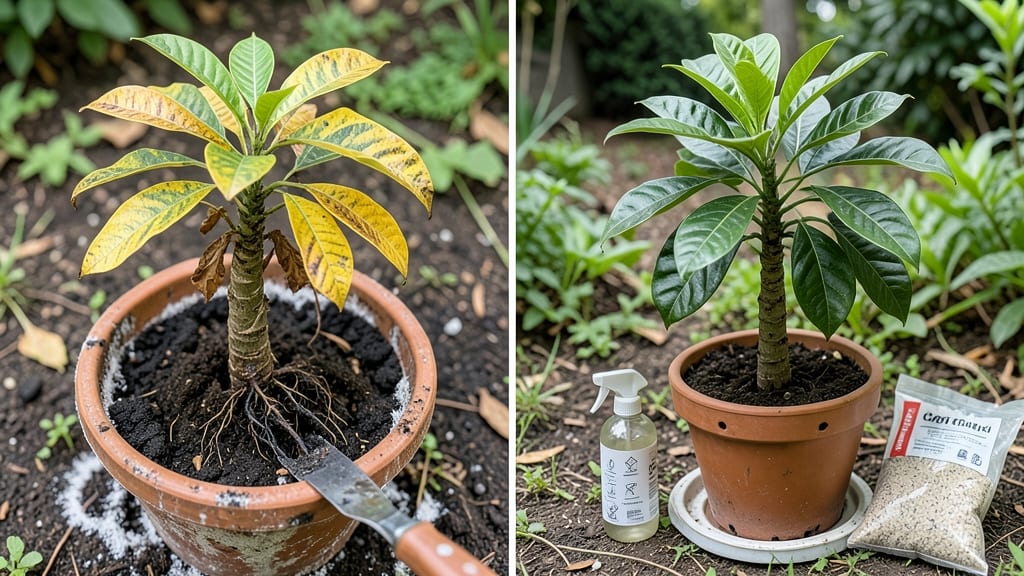
The overwatered money tree root rot causing your drooping leaves and mushy roots isn’t a death sentence—it’s fixable. 🌱 I've nursed back more than a dozen of these plants by following three simple steps that work even when the roots look like they've been sitting in a swamp.
The first clue is usually yellowing leaves that won't perk up, even after watering. Then comes the foul smell when you lift the pot—trust me, you'll notice. The good news? Money trees are tough.
With proper drainage, adjusted watering, and a little patience, you'll see fresh green growth within 4-6 weeks. Start by removing the plant, trimming away black, mushy roots, and repotting in fresh, well-draining soil.
Water lightly for the first week, then let the top 2-3 inches dry out completely before watering again. That's the game-changer—most people never adjust their watering routine.
Once you've got the basics down, keep your money tree thriving with these simple habits: larger pots with drainage holes, a moisture meter to avoid guesswork, and a sunny spot where it can recover its strength. Your plant will bounce back—just give it time.
Root Rot’s Silent Triggers
Your money tree (Pachira aquatica) thrives on balance—too much water disrupts its delicate root system, setting the stage for root rot. But why does this happen?
The culprits are often invisible until it’s too late. Let’s break down the science behind the problem so you can spot the warning signs before they spiral.
Money trees are tropical plants, but their roots hate soggy conditions. When you water too frequently—or leave the plant sitting in excess moisture—the roots suffocate. Here’s what goes wrong:
- Oxygen deprivation: Roots need air pockets in the soil to breathe. Overwatering displaces oxygen, forcing roots to switch to anaerobic respiration—a slow, toxic process that produces ethanol (yes, like alcohol). This poisons the plant’s cells.
- Fungal feast: Stagnant water creates the perfect breeding ground for Phytophthora and Pythium fungi, which gnaw away at root tissue. These pathogens thrive in moisture levels above 60% soil saturation.
- Salt buildup: Tap water often contains minerals (chlorides, fluorides) that accumulate in the soil. Over time, this raises the soil’s salinity, further stressing roots and blocking water absorption.
Pro tip: 💡 Stick your finger 2–3 inches into the soil before watering. If it’s damp, wait. If it’s bone-dry, you’ve likely underwatered—but if it’s mushy, you’ve overdone it.
A money tree’s roots are sensitive to waterlogging, but even well-draining soil can fail if the container or medium is the problem. Here’s how poor drainage sabotages your plant:
- Clogged pots: Small drainage holes or a lack of them mean water pools at the bottom. Over time, roots at the base rot first, cutting off nutrient flow to the rest of the plant.
- Compacted soil: Heavy or clay-based potting mixes don’t allow water to escape. Roots in compacted soil can’t expand properly, leading to hypoxia (oxygen starvation).
- No aeration layer: Skipping a layer of perlite, pumice, or gravel at the pot’s bottom traps water against the roots, accelerating rot.
Action step: ✨ If your pot has no drainage holes, repot immediately into a container with holes and a coarse, airy mix (e.g., 60% peat/coir, 30% perlite, 10% orchid bark).
Money trees love warmth and humidity, but extreme conditions can amplify the damage from overwatering. Here’s how:
| Condition | Effect on Roots | Ideal Range |
|---|---|---|
| Low temperatures (<60°F) | Slows root metabolism, making them less efficient at processing excess water. Cold roots are also more susceptible to fungal attacks. | 65–85°F (ideal: 70–75°F) |
| High humidity (>70%) | While beneficial for leaves, excessive humidity near roots (e.g., from misting or a closed terrarium) keeps soil moist longer, extending the window for rot. | 40–60% (with occasional misting for leaves) |
| Drafty environments | Fluctuating temps cause roots to shrink and swell, weakening cell walls and making them more vulnerable to pathogens. | Avoid placing near AC vents or open windows. |
Fix it: 🌡️ Keep your money tree in a consistent environment. Use a hygrometer to monitor humidity and a heating mat (set to 72°F) if temperatures dip below 65°F.
Not all potting mixes are created equal. Heavy, water-retentive soils are a death sentence for money tree roots. Here’s why:
- Lack of porosity: Dense soils (like garden soil or pure peat) don’t allow water to drain quickly. Roots stay waterlogged for days, even after watering.
- Poor aeration: Compacted mixes block oxygen flow, forcing roots into survival mode. Over time, this leads to necrosis (cell death).
- Nutrient imbalance: Soils high in organic matter (e.g., compost-heavy mixes) can ferment when overwatered, releasing toxic gases like methane and hydrogen sulfide.
Solution: 🌿 Use a chunky, fast-draining mix designed for tropical plants or create your own:
- 50% coconut coir or peat moss (for moisture retention)
- 30% perlite or pumice (for aeration)
- 20% orchid bark or charcoal (for structure and fungus control)
Revive Your Money Tree Now
Root rot in your money tree (Pachira aquatica) is fixable—even if it’s looking sad and soggy! The key is acting fast, adjusting care habits, and giving your plant the right conditions to bounce back. Below, we’ll break down cause-specific fixes and prevention tips to save your green friend.
---
Cause: Overwatering or poor drainage is the #1 culprit. Roots suffocate in wet soil, leading to rot.
Fix It: - 🚰 Drain the excess water – If the soil is soggy, empty the pot and let it air out for 1–2 hours. Avoid watering again until the top 1–2 inches are dry. - 🪴 Repot if needed – If roots are mushy or black (signs of rot), gently remove the plant, trim away mushy roots with sterilized scissors (dip in rubbing alcohol), and repot in fresh, well-draining soil. - ⏰ Adjust your watering schedule – Money trees hate wet feet! Water only when the top 2–3 inches of soil are dry (usually every 7–10 days in warm weather, less in winter).
💡 Pro Tip: Use a moisture meter or the finger test to check soil dryness—don’t guess!
---
Cause: Compacted or water-retentive soil traps moisture, worsening rot.
Fix It: - 🪴 Upgrade your pot – If it lacks drainage holes, repot into a terracotta or ceramic pot with holes (or drill them yourself). - 🌱 Use the right soil mix – Money trees thrive in chunky, airy soil. Mix: - 50% well-draining potting soil - 30% perlite or pumice (for aeration) - 20% orchid bark or coco coir (for structure) - 🪴 Add a layer of gravel – Place ½ inch of pebbles at the bottom of the pot before adding soil to prevent clogging.
💡 Pro Tip: If repotting feels overwhelming, at least top-dress with fresh soil and perlite to improve drainage without a full overhaul.
---
Cause: Weakened roots struggle to absorb nutrients, slowing recovery.
Fix It: - ☀️ Give it bright, indirect light – Move your money tree to a south or east-facing window (avoid harsh midday sun). Low light slows healing. - 🌡️ Keep humidity moderate – Mist leaves occasionally or place the pot on a pebble tray with water (but ensure the pot doesn’t sit in standing water). - 🍃 Fertilize lightly – Once roots recover (after 2–4 weeks), use a balanced, water-soluble fertilizer (diluted to ½ strength) once a month in spring/summer. Skip fertilizer in fall/winter!
⚠️ Warning: If the plant is severely rotted, hold off on fertilizer until new growth appears—roots need time to heal first.
---
Cause: Rot weakens the plant, causing yellow leaves or leaf drop.
Fix It: - ✂️ Trim dead or yellowing leaves – Use clean scissors to snip off any leaves that are brown, mushy, or crispy. This helps the plant focus energy on recovery. - 🌱 Don’t prune healthy stems – Only remove dead branches or leaves with black spots. Healthy growth is your plant’s lifeline!
💡 Pro Tip: If your money tree is bare or leggy, prune back overgrown stems to encourage fuller, bushier regrowth—just do this after roots recover.
---
Cause: Repeated overwatering or poor habits lead to recurring rot.
Prevent It: | Habit to Change | Better Practice | Why It Works | |---------------------------|--------------------------------------------|------------------------------------------| | Watering on a schedule | Check soil moisture first | Prevents soggy soil | | Using heavy clay soil | Switch to airy, fast-draining mix | Roots stay oxygenated | | Ignoring yellow leaves | Prune and adjust care immediately | Stops nutrient drain on weak roots | | Skipping pot checks | Inspect roots every 2–3 months | Catches rot early |
🎯 Long-Term Care: - 🌱 Rotate your plant every few months for even growth. - 🚿 Wipe leaves with a damp cloth to remove dust (helps with photosynthesis). - 🌡️ Keep temps stable (65–80°F) and avoid cold drafts.
---
Your money tree can fully recover with patience and the right care! Most plants show new growth in 4–8 weeks if roots are healthy. If you’ve followed these steps and still see no improvement after 2 months, the rot may be too severe—but don’t give up!
Try propagating healthy stems in water to grow a new plant.
🌿 You’ve got this—your money tree is on its way back!
Frequently asked questions
How can I tell if my money tree has root rot from overwatering?
Look for these key signs: yellowing leaves that won't green up, a foul smell when you lift the pot, and roots that are black, mushy, or falling apart when touched. Healthy roots should be firm and white or light tan. If you see these symptoms, act fast—trim the bad roots and repot immediately.
Can I save my money tree if the roots are completely rotted?
It depends on how much healthy root remains. If you find any firm, white roots when you inspect, there's still hope! Trim away all the mushy black roots, repot in fresh, well-draining soil, and give it time to regrow. If there are no healthy roots left, try propagating healthy stems in water to grow a new plant.
What's the best way to adjust my watering routine after fixing root rot?
Let the top 2-3 inches of soil dry out completely before watering again. In warm weather, this might be every 7-10 days, while winter care may require watering only every 2-3 weeks. Use a moisture meter or stick your finger in the soil to check—if it's damp, wait longer.
Will my money tree ever fully recover from root rot?
With proper care, most money trees can make a full recovery! You'll typically see new growth within 4-8 weeks if the roots are healthy enough. Keep the soil dry, provide bright indirect light, and avoid fertilizing until you see fresh leaves appearing. Patience is key—don't give up too soon!
Can I use hydrogen peroxide to treat root rot in my money tree?
Yes! Mix 1 part 3% hydrogen peroxide with 4 parts water and use it to water your plant once a week for 2-3 weeks after repotting. This helps kill fungus and bacteria while promoting new root growth. Just make sure to use it sparingly—it's strong stuff!