
Pruning
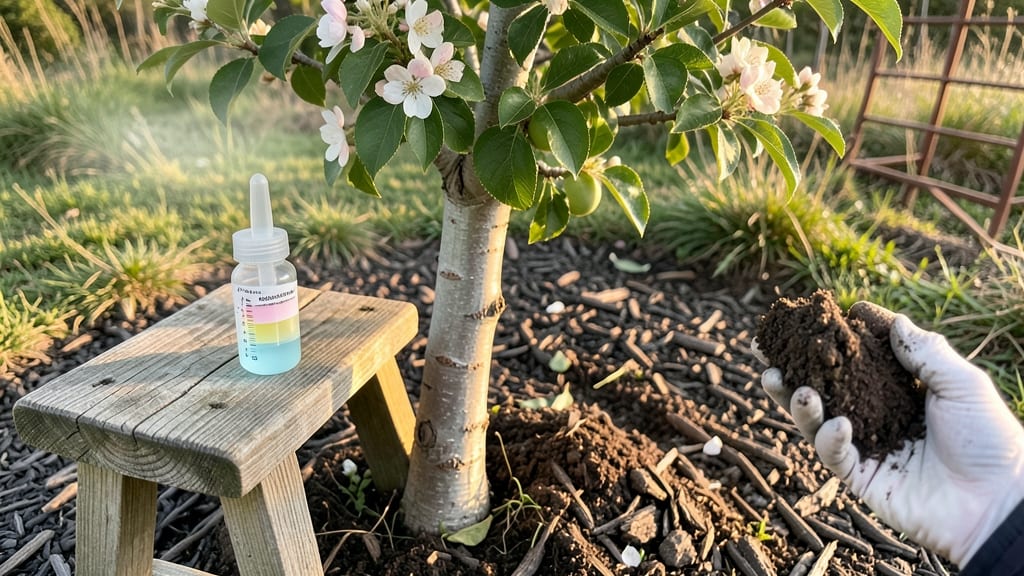
Growing a thriving peach tree 🍑 starts with the right soil requirements—well-draining, slightly acidic to neutral pH, and rich in organic matter.
If your peach tree leaves look yellow or wilt despite plenty of water, the soil might be too dense or lacking nutrients. The key to juicy fruit and strong growth lies in getting the foundation right from planting.
Peach trees need loamy soil that drains quickly but holds moisture, with a pH between 6.0 and 7.0. Too much clay or sand? We’ll show you how to amend it for the best results in your region.
In this guide, you’ll learn how to test your soil, adjust pH, and add the right amendments—so your peach tree not only survives but thrives and produces abundant, flavorful fruit every season.
Peach tree soil pH requirements: the ideal range for Healthy growth
If your peach tree isn’t producing fruit—or its leaves look pale and stunted—your soil’s pH balance might be the culprit. Peaches thrive in soil with a slightly acidic to neutral pH, typically between 6.0 and 7.0.
This range ensures your tree can absorb essential nutrients like nitrogen, phosphorus, and potassium, which are critical for blooming and fruiting. Without the right pH, your tree struggles to fight diseases and develop sweet, juicy peaches.
Think of soil pH like the foundation of a house. Just as a crooked foundation weakens the entire structure, the wrong pH weakens your peach tree’s roots, stunting growth and reducing fruit yield.
For example, if your soil is too acidic (below 6.0), nutrients like phosphorus and calcium become locked away, while alkaline soil (above 7.0) can cause iron and manganese deficiencies, leading to yellowing leaves—a classic sign of chlorosis. Let’s fix that!
| Soil Condition | Ideal pH Range | Signs of Imbalance | Solution |
|---|---|---|---|
| Acidic Soil | Below 6.0 | Yellow leaves, stunted growth | Add pelletized lime (1-2 lbs per 100 sq ft) |
| Neutral Soil | 6.0-7.0 | Healthy green leaves, strong growth | Maintain with compost and mulch |
| Alkaline Soil | Above 7.0 | Yellowing between veins, weak roots | Add elemental sulfur (1 lb per 100 sq ft) |
Before you rush to adjust your soil, you’ll need to test its pH. Grab a soil pH test kit from your local garden center—these are affordable and easy to use.
Simply collect soil samples from 6 inches deep around your tree’s drip line (the area where water drips from the leaves), mix them in a clean container, and follow the kit’s instructions. For a more precise reading, send a sample to a cooperative extension service in your state.
Most labs provide results within a week for a small fee.
Once you know your soil’s pH, it’s time to make adjustments. For acidic soil, spread pelletized lime evenly over the root zone in early spring or fall. Work it into the top 6 inches of soil using a garden fork.
If your soil is too alkaline, apply elemental sulfur instead. This takes longer to change pH—about 2-3 months—so plan ahead. Always water the area thoroughly after applying amendments to help them integrate into the soil.
Organic matter plays a huge role in stabilizing pH naturally. Mix in 2-3 inches of compost or well-rotted manure annually to improve soil structure and buffer pH swings. Mulch with wood chips or straw to retain moisture and gradually acidify the soil over time.
This method is slower but safer for long-term tree health, especially in clay-heavy soils where quick amendments can disrupt the root environment.
Monitor your peach tree’s progress after adjustments. Healthy leaves should turn a vibrant dark green, and new growth will appear more vigorous. If you notice brown spots on leaves or poor fruit set even after adjusting pH, check for other issues like pests or nutrient deficiencies.
For example, zinc deficiency (common in alkaline soils) causes small, deformed leaves—this can be fixed with a zinc sulfate spray.
Regional differences matter too! In northern climates (USDA Zones 5-6), soil tends to be more acidic due to rainfall, while southern climates (Zones 7-9) often deal with alkaline soils from limestone bedrock.
If you’re in a drought-prone area, mulching becomes even more critical to retain moisture and prevent pH spikes. Always tailor your approach to your local conditions.
Pro tip: Test your soil’s pH annually in early spring before fertilizing. This helps you stay proactive about adjustments and ensures your peach tree gets the optimal growing conditions every season. With the right pH, your tree will reward you with abundant, flavorful peaches for years to come! 🍑
Best soil drainage and texture for peach trees: avoiding root rot and waterlogging
Peach trees thrive in well-draining, loamy soil that mimics their natural habitat in temperate climates. The ideal soil texture should balance sand, silt, and clay to prevent waterlogging while retaining enough moisture for deep root growth.
Sandy soil drains too quickly, while clay soil holds excess water—both can suffocate roots and invite root rot or fungal diseases.
For optimal growth, aim for a loamy soil texture with 40% sand, 40% silt, and 20% clay. This composition allows air and water to circulate while providing the nutrients peach trees crave.
If your soil feels gritty when dry or forms hard clumps when wet, it’s likely sandy or clay-heavy, and amendments will be necessary to create the perfect growing medium.
⚠️ callout warning ⚠️
Peach trees cannot tolerate soggy roots. Signs of waterlogging include:
- Yellowing leaves (chlorosis)
- Fungal growth (mushrooms at base)
- Stunted growth despite regular watering
Test your soil: Grab a handful—if it forms a tight ball that doesn’t crumble, it’s too clay-heavy. If it falls apart instantly, it’s too sandy.
To improve clay soil, mix in 2-3 inches of organic compost and coarse sand (like builder’s sand) to break up compaction. For sandy soil, amend with peat moss or compost to boost water retention.
Raised beds are another great solution—they give you full control over soil composition and drainage.
Mulching is another game-changer. Apply a 3-inch layer of wood chips or straw around the tree’s base (keep mulch 6 inches away from the trunk) to regulate soil temperature and moisture.
This mimics natural forest floors where peach trees originally grew, reducing stress on roots during hot summers or cold winters.
If you’re planting in heavy clay, consider digging a 12-inch-deep hole and filling the bottom with gravel or crushed stone before backfilling with amended soil. This creates a drainage layer that mimics the natural slopes where peach trees thrive.
For container-grown peach trees, use a well-draining potting mix with perlite or vermiculite to prevent root suffocation.
Finally, monitor your peach tree’s soil after planting. If leaves curl or drop prematurely, it may signal overwatering or poor drainage. Adjust your watering schedule to deep, infrequent soaks rather than light, frequent watering.
Healthy peach trees should have dark green leaves and strong, upright growth—a clear sign your soil is working perfectly.