
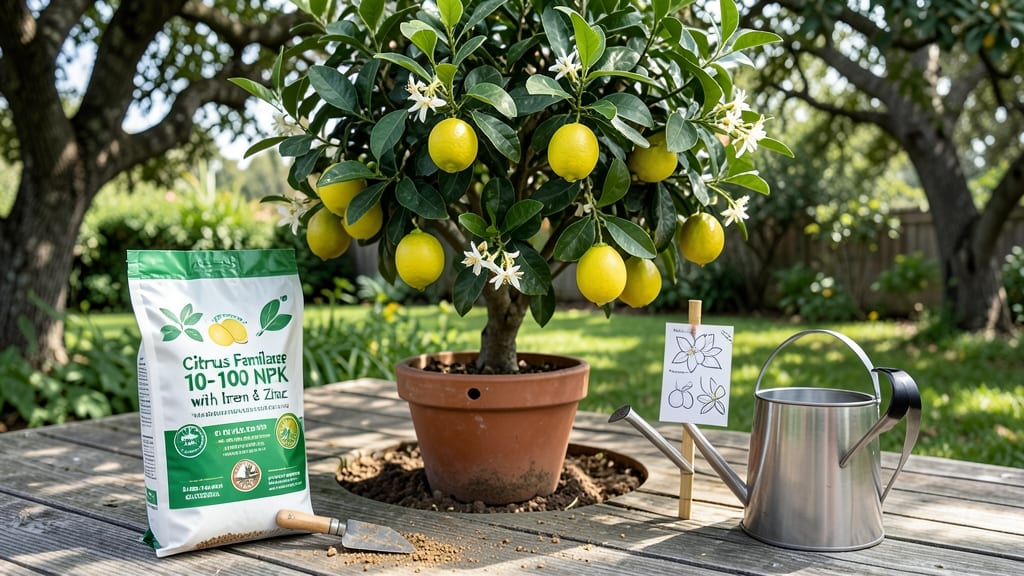
When to Fertilize Lemon Tree in Pot: Monthly Schedule for Year-Round Growth

Container Gardens

When to Fertilize Lemon Tree in Pot: Monthly Schedule for Year-Round Growth

Fertilizing your potted lemon tree šŸ‹ at the right time makes all the difference between a lush, fruit-bearing tree and one that struggles to grow.

Struggling to keep your potted lemon tree thriving? The secret isn’t just what you fertilize with—but when. Timing directly impacts fruit production, leaf health, and overall growth, yet many gardeners get it wrong.

Here’s the truth: your lemon tree needs a feeding schedule that matches its natural growth cycle. In spring and summer, when it’s pushing out new leaves and flowers, regular feeding fuels that energy.

But in fall and winter, when it slows down, over-fertilizing can do more harm than good.

Below, I’ll break down the exact months to fertilize, how often to adjust for your climate, and the telltale signs your tree is begging for nutrients—or warning you to stop.

šŸ‹ Lemon Tree Fertilizer
6-6-6 or 8-3-9 (citrus-specific)
N Nitrogen
30%
P Phosphorus
30%
K Potassium
30%

Lemon tree fertilizing schedule by season: what months to feed

Timing your lemon tree’s fertilizer applications is just as critical as choosing the right nutrients. Unlike annuals that thrive on frequent feeding, citrus trees like lemons need a seasonal approach tied to their natural growth cycles.

Over-fertilizing in winter can burn roots, while skipping spring feeds delays fruit set. Let’s break down the month-by-month schedule that aligns with your potted lemon’s needs.

Your lemon tree’s growth follows clear seasonal patterns: active growth in spring/summer, preparation in fall, and dormancy in winter. Each phase requires different care. For example, in March, when you spot fresh green shoots and buds forming, that’s your cue to start feeding.

But by November, when leaves yellow and growth slows, it’s time to pause entirely. Understanding these triggers helps you avoid common mistakes like root burn or stunted growth.

Here’s the essential monthly guide to fertilizing your potted lemon tree, including nutrient needs, environmental cues, and fertilizer types to use:

Month Growth Phase Fertilizer Action Frequency NPK Ratio Environmental Cues
January Dormancy None — — Cool temps, no new growth
February Dormancy None — — Pre-bloom buds visible
March Active Growth Feed Every 4 weeks 6-6-6 New leaves emerging
April Active Growth Feed Every 4 weeks 6-6-6 Blooms appear, fruit set
May Active Growth Feed Every 4 weeks 8-3-9 Rapid leaf/fruit expansion
June Summer Growth Light Feed Every 6 weeks 4-4-4 High heat, reduce feeding
July Summer Growth Light Feed Every 6 weeks 4-4-4 Monitor for pests
August Summer

Signs your potted lemon tree needs fertilizer (and when to skip it)

Your potted lemon tree silently communicates its needs through subtle (and sometimes obvious) visual cues. Yellowing leaves, stunted growth, or sparse fruit production often signal it's time to fertilize—but not always.

Before reaching for that citrus fertilizer, learn to read your tree's body language to avoid over- or under-feeding mistakes.

First, examine the leaf color. Healthy lemon tree leaves should be a vibrant dark green. If you notice pale yellow leaves (chlorosis) between the veins, this is a classic sign of nutrient deficiency, particularly iron or nitrogen.

These deficiencies often occur when the soil lacks essential minerals, especially in container-grown trees where nutrients deplete faster.

Another red flag is slow growth. If your lemon tree isn’t adding new branches or leaves during its active growing season (spring and summer), it’s likely starving for nutrients.

Compare its growth to similar-aged trees—if yours is lagging behind, it’s time to feed. Fruit development also matters: small, misshapen lemons or a lack of blossoms can indicate the tree needs a nutrient boost.

āš ļø callout-warning āš ļø

āš ļø When to Skip Fertilizing Your Potted Lemon Tree

Over-fertilizing is just as harmful as under-fertilizing. Skip feeding if you see:

  • Brown leaf tips or crispy edges (sign of salt burn from excess fertilizer)
  • Wilting leaves despite moist soil (root damage from too many nutrients)
  • White crust on soil surface (fertilizer buildup)
Winter months (November-February) are also a no-feed zone—your lemon tree enters dormancy and doesn’t need nutrients. Resume feeding in early spring when new growth appears.

Don’t ignore root-bound signs either. If roots circle the pot’s bottom or grow out of drainage holes, your tree’s root system is stressed and competing for nutrients in limited soil.

In this case, repot your lemon tree first, then fertilize lightly after a few weeks of recovery. Roots need space to access nutrients efficiently!

For fruit-bearing trees, pay attention to blossom production. If your lemon tree flowers but drops them before fruiting, it may need phosphorus-rich fertilizer to support flowering and fruit set. A balanced citrus fertilizer (6-6-6 or 8-3-9 NPK ratio) applied every 4-6 weeks during growing season usually resolves this issue.

Finally, check the soil moisture before fertilizing. Dry, cracked soil means your tree isn’t absorbing nutrients properly—water it thoroughly first. If the soil stays soggy after watering, your tree may have root rot, and fertilizing could worsen the problem.

Always let the top 1-2 inches of soil dry between waterings and fertilizing sessions.

ā˜…ā˜…ā˜…ā˜…ā˜…4.7(12 reviews)
Categories Container Gardens