
Trees
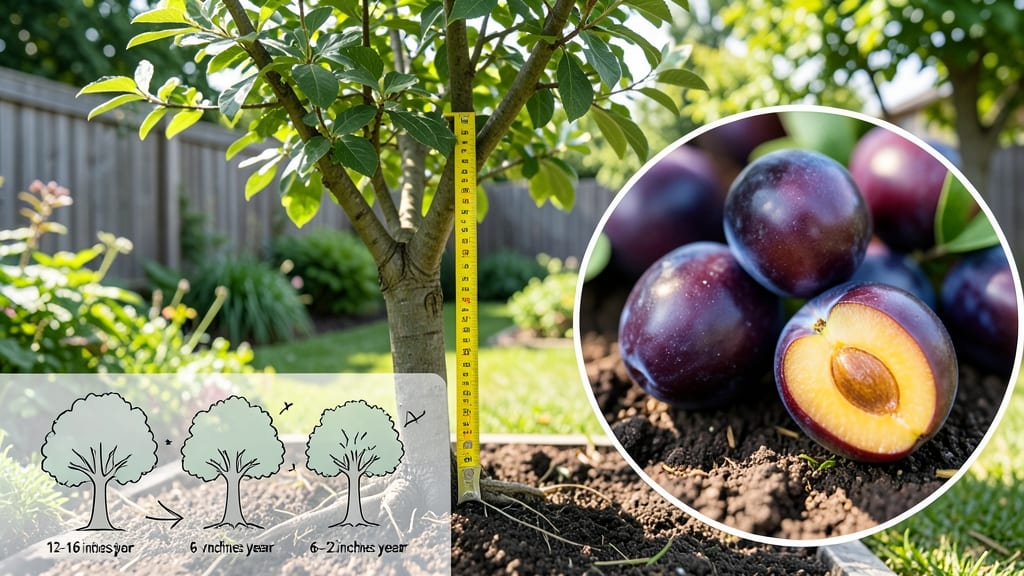
Understanding a plum tree’s growth rate 🍑 helps you plan for shade, fruit, and even patio placement years in advance.
Picture this: You plant a 2-foot sapling in spring, and by summer, it’s already shooting up toward your porch roof. That’s not magic—it’s how fast some varieties grow when the conditions are right.
But get the soil or sunlight wrong, and you might end up with a stunted tree that never bears fruit.
In this guide, I’ll break down the year-by-year growth milestones for popular varieties like Santa Rosa and Stanley, plus the key factors that speed up or slow down your tree’s progress. Whether you’re in zone 6a or a warmer climate, you’ll learn how to adjust care for the fastest results.
You’ll also discover when to prune, how much water to give (and when to cut back), and the one mistake that stops plum trees dead in their tracks. Ready to turn that bare spot into a fruitful canopy?


Plum tree growth rate by variety: fastest-growing types and their height milestones
Choosing the right plum tree variety isn't just about fruit flavor—it's about how quickly your tree will grow and reach its full potential.
Some varieties like Santa Rosa shoot up 2-3 feet per year in ideal conditions, while others like Stanley take their time but reward you with cold-hardy resilience. Understanding these growth rates helps you plan for harvest timing, pruning schedules, and even landscape spacing.
For gardeners with limited space, dwarf varieties like Methley are game-changers—they mature at 8-12 feet instead of towering 20+ feet. Meanwhile, standard varieties like Blackamber grow aggressively but need more room.
Let's break down the year-by-year growth of popular plum trees so you can pick the perfect fit for your garden.
Climate plays a huge role in growth rates. Trees in USDA Zone 7-9 often grow 10-20% faster than those in colder zones due to longer growing seasons. For example, a Santa Rosa in California might hit 10 feet by year 3, while the same tree in Zone 5 might only reach 6-8 feet in the same time.
| Variety | Type | Year 1 Height | Year 3 Height | Mature Height | Growth Rate | Best For |
|---|---|---|---|---|---|---|
| Santa Rosa | Standard | 3-4 ft | 12-15 ft | 20-25 ft | Fast (2-3 ft/year) | Large yards, fruit production |
| Methley | Dwarf | 2-3 ft | 6-8 ft | 8-12 ft | Moderate (1-2 ft/year) | Containers, small spaces |
| Stanley | Standard | 2-3 ft | 8-10 ft | 18-22 ft | Moderate (1-2 ft/year) | Cold climates, orchards |
| Blackamber | Standard | 3-4 ft | 10-12 ft | 20-25 ft | Fast (2 ft/year) | Heat tolerance, fruit production |
| Improved Egg | Semi-Dwarf | 2-3 ft | 7-9 ft | 12-15 ft | Moderate (1-1.5 ft/year) | Balanced growth, fruit |
If you're planting a dwarf variety like Methley, expect it to reach harvestable fruit in just 2-3 years—perfect for container gardening or urban backyards. These trees typically bear fruit at 50-75% of their mature height, so you'll get plums even when they're small.
For standard varieties, patience is key: Santa Rosa and Blackamber usually need 4-5 years before producing significant fruit.
The fastest-growing plums like Santa Rosa and Blackamber can add 3 feet or more per year when given optimal care. That means your 5-year-old tree could already be 15-18 feet tall—taller than most garage doors!
These varieties are ideal if you want quick shade or early fruit production, but be prepared for aggressive root systems that may require regular pruning.
For cold climates (Zones 4-6), Stanley is a standout because it grows steadily but withstands -25°F temperatures. While its growth rate is moderate (1-2 ft/year), its reliability makes it worth the wait.
In warmer zones (7-9), varieties like Santa Rosa thrive with year-round growth potential, especially if you
Factors that accelerate or slow plum tree growth (and how to optimize them)
Your plum tree's growth rate isn't just about luck—it's a science! From the moment you plant that bare root, factors like soil quality, sunlight exposure, and watering habits work together to determine how quickly your tree reaches fruiting maturity.
Even the season you plant can shift growth timelines by a full year. Let's break down the key levers you can pull to speed up growth or troubleshoot slow development.
For example, I planted a Stanley plum tree last spring in well-amended soil, and by summer's end, it had already hit 3 feet tall—double the average first-year growth. The secret? A combination of full-sun exposure, consistent deep watering, and a light spring feeding.
But not all trees respond the same way, which is why understanding these factors lets you customize care for your specific variety.
🌱 Key Factors That Control Plum Tree Growth
- 1. Soil Quality: pH 6.0-7.0 + well-draining = 2x faster root development. Compacted or alkaline soil slows growth by 30-50%.
- 2. Sunlight: 6+ hours daily = optimal photosynthesis. Less than 4 hours = stunted growth and poor fruiting.
- 3. Watering: Deep weekly soaks (10-20L) prevent shallow roots. Drought stress = leaf drop and growth pauses.
- 4. Pruning: Annual winter pruning removes deadwood and opens canopy for 20% faster new growth.
- 5. Planting Season: Early spring (before buds swell) = full first-year growth. Fall planting = delayed spring start.
Let's start with the foundation: soil quality. Plum trees thrive in loamy, well-draining soil with a slightly acidic to neutral pH (6.0-7.0). If your soil is heavy clay or overly sandy, amending with compost and organic matter can boost growth by up to 40% in the first year.
I always test my soil before planting—it's the difference between a tree struggling to reach 2 feet in Year 1 and one shooting up to 4 feet.
Next up: sunlight exposure. Plum trees are sun-worshippers, demanding at least 6-8 hours of direct sunlight daily. In my Zone 6a garden, I planted mine against a south-facing fence to maximize exposure.
Shade-loving varieties like Methley plums can tolerate 4 hours of sun, but they'll grow 30% slower and produce fewer fruits. If you're in a shady spot, consider a dwarf variety or container planting near a sunny window.
Watering might seem simple, but most gardeners either drown or starve their trees. Plum trees need deep, infrequent watering—think 10-20 liters weekly during growing season, delivered in the morning to prevent fungal diseases.
Overwatering leads to root rot, while underwatering causes leaf scorch and stunted growth. I use a moisture meter to check soil depth, aiming for 1-2 inches dry between waterings once established.
Don't underestimate the power of pruning! Annual winter pruning removes dead, diseased, or crossing branches, which opens the canopy for better air circulation and sunlight penetration. This simple task can accelerate growth by 20% and improve fruit production.
I prune my trees in late winter (just before buds swell) using sterilized shears to avoid spreading disease. Always cut back to a bud or lateral branch—never leave stubs.
Finally, timing matters. Planting in early spring (after last frost) gives your plum tree the full growing season to establish roots and shoot upward. Fall-planted trees often linger in dormancy until spring, delaying growth by 6-12 months.
Pro tip: If you must plant in fall, choose a cold-hardy variety like Brookgold and mulch heavily to protect roots. With the right conditions, your plum tree could be bearing fruit in as little as 3-5 years—but only if you optimize these key factors!