
Size
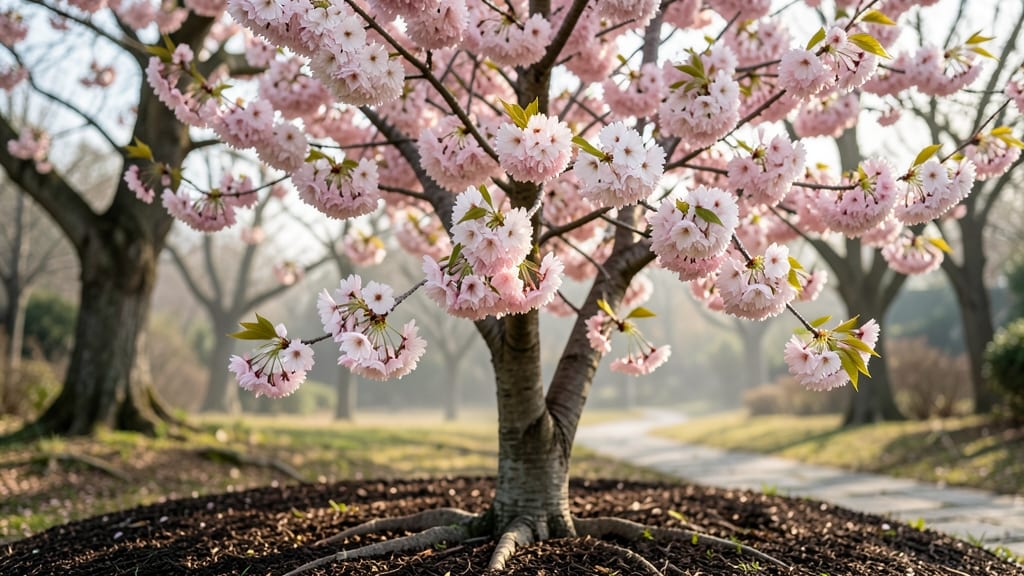
To grow a sakura tree in a garden, choose your variety carefully—dwarf types like S. 'Royal Celebration' max out at 15 feet, while standard varieties such as S. × yedoensis can reach 30–40 feet tall. Plant at least 15–25 feet from buildings, use well-drained soil, and space multiple trees 20–30 feet apart for full blooms and airflow.
Sakura trees bring stunning spring blooms but demand thoughtful planning to thrive.
The right variety makes all the difference—dwarf types work perfectly for small yards, while larger varieties need spacious areas to develop their full majesty. 🌸 For example, weeping sakuras create beautiful cascades but require wider spacing, while upright varieties grow taller with narrower canopies.
Understanding these growth patterns helps you visualize the tree's mature shape and plan your garden layout accordingly.
Beyond size, sakura trees need consistent care to reach their potential. Most varieties prefer full sun (at least 6 hours daily) and well-drained soil to prevent root rot—a common issue in heavy clay.
I've found that planting in early spring gives roots time to establish before summer heat, while mulching helps retain moisture. For urban gardens, container-growing dwarf varieties can be a great solution, though they'll need regular pruning to maintain shape.
💡 In This Article
- Sakura Tree Growth Patterns by Variety
- Planting and Spacing Tips for Healthy Sakura Trees
Sakura tree growth patterns by variety
Sakura trees exhibit dramatic differences in growth habits depending on the variety. For instance, the dwarf sakura (Prunus × yedoensis 'Royal Celebration') typically reaches only 10–15 feet tall with a spread of 10–12 feet, making it ideal for small gardens or containers.
In contrast, the weeping sakura (Prunus pendula) can grow 20–30 feet tall but spreads 15–25 feet wide, creating a stunning waterfall effect that requires ample horizontal space.
The growth rate also varies—dwarf varieties grow about 1–2 feet per year, while larger types may add 2–3 feet annually during active seasons.
The root system plays a crucial role in stability and nutrient uptake. Most sakura trees develop a deep taproot system that extends 3–5 feet downward, which helps anchor them in windy conditions.
However, surface roots spread widely, especially in weeping varieties, which can disrupt sidewalks or driveways if planted too close.
The blooming season also differs: early bloomers like Prunus × yedoensis flower in late March to early April, while later varieties such as Prunus serrulata 'Kanzan' bloom in mid-April, extending the visual appeal of your garden.
Seasonal growth cycles are another key factor. Sakura trees experience rapid growth in spring and early summer, followed by a dormant period in winter. This means pruning should occur in late winter or early spring before new growth begins.
For example, a 20-foot-tall Prunus × yedoensis planted in a suburban yard may take 10–15 years to reach maturity, while a dwarf variety could fully develop in 5–7 years.
Understanding these cycles helps you plan for seasonal care, such as watering deeply in summer and protecting young trees from late frosts.
Consider the visual impact of each variety. Upright sakuras like 'Kanzan' create bold vertical accents, while weeping types add soft, cascading drama. The spread-to-height ratio is critical: a 30-foot-tall tree with a 20-foot spread needs a 50-foot-diameter planting area to avoid overcrowding.
In small gardens, dwarf varieties or espaliered sakuras can be trained against walls or fences, saving space without sacrificing beauty. The choice ultimately depends on your garden’s layout and your desire for shade or seasonal interest.
One often-overlooked detail is how sakura trees interact with other plants. Their shallow root systems can compete with grasses or shallow-rooted perennials, so mulching with wood chips or bark (3–4 inches deep) helps suppress weeds while retaining moisture.
In urban settings, container-grown sakuras thrive in 15–20 gallon pots with drainage holes, but they’ll need regular watering and occasional root pruning to prevent circling roots. For rural gardens, larger varieties can be planted as focal points, with understory plants like azaleas or hostas complementing their seasonal cycles.
Here’s a quick comparison to help visualize the differences:
- Dwarf Sakura (e.g., 'Royal Celebration'): 10–15 ft tall, 10–12 ft spread, ideal for small spaces or containers
- Weeping Sakura (e.g., Prunus pendula): 20–30 ft tall, 15–25 ft spread, needs wide open areas
- Standard Sakura (e.g., 'Kanzan'): 25–35 ft tall, 20–25 ft spread, best for large gardens or parks
Choosing the right variety ensures your sakura tree not only fits your garden’s size but also thrives with minimal stress. The key is balancing aesthetics, space, and long-term growth potential—so you can enjoy those iconic pink blooms for decades to come. 🌸