
Container Gardens
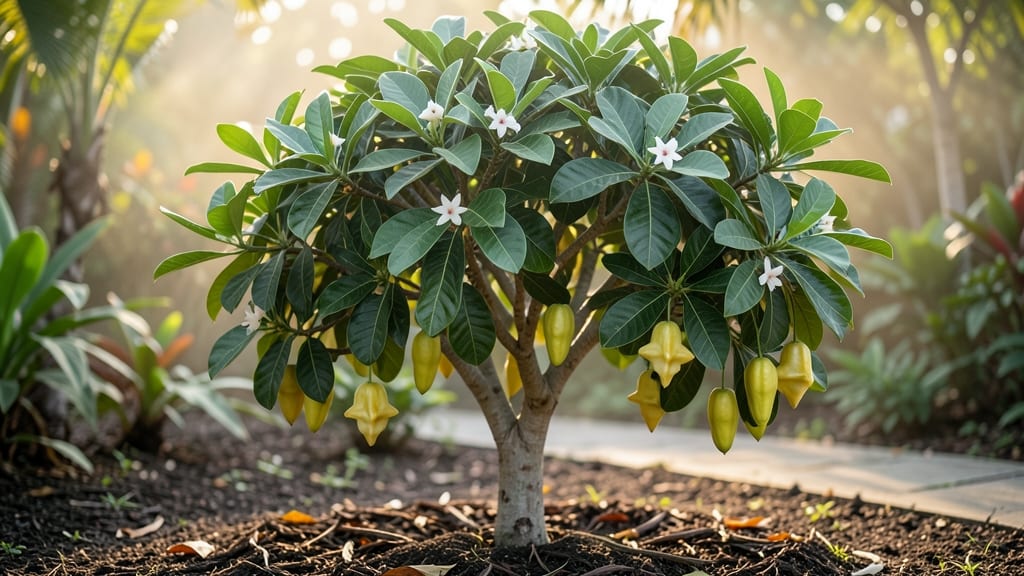
Growing star fruit trees successfully requires USDA hardiness zones 10 through 12, where temperatures never dip below 30°F (-1°C), as even light frost can kill the tree and ruin fruit production. These tropical trees prefer coastal or humid climates with well-draining soil.
Star fruit trees are tropical natives that can't handle cold—anything below 30°F (-1°C) risks permanent damage to leaves, stems, and roots. 🌱 Unlike citrus, which can survive brief cold snaps, star fruit trees suffer irreversible cell damage at 28°F (-2°C).
This is why you'll only find thriving trees in Florida's southern coasts, Hawaii, or California's desert regions.
For gardeners in cooler zones, container growing with winter protection (like thick mulch or row covers) can extend the growing season. Some varieties, like the 'Carambola' cultivar, show slightly better cold tolerance, but they still need consistent warmth.
The key is mimicking their natural tropical environment—high humidity, afternoon shade, and soil that drains quickly to prevent root rot.
💡 In This Article
- Understanding Star Fruit Tree Cold Tolerance Limits
- Creating Optimal Microclimates for Star Fruit Trees
Understanding star fruit tree cold tolerance limits
The star fruit tree's cold sensitivity stems from its tropical origins in Southeast Asia, where temperatures rarely drop below 60°F (15°C).
At the cellular level, its leaves contain delicate chloroplasts that freeze and rupture when exposed to 28°F (-2°C) or lower, a threshold even slightly colder than citrus trees can handle.
Unlike citrus, which can survive brief dips to 20°F (-7°C) with some protection, star fruit trees suffer irreversible damage to their vascular system at just 30°F (-1°C), causing brown, crispy leaf edges that never recover. 🌿
Roots are particularly vulnerable because they lack the protective bark of stems and branches. When soil temperatures fall below 50°F (10°C), root activity slows dramatically, and exposure to 32°F (0°C) triggers cell death within hours.
This explains why even a single night of frost can kill a mature tree—roots absorb the cold first, disrupting the tree's ability to transport water and nutrients. In contrast, citrus trees can regrow new roots in spring, but star fruit trees often die back completely after frost damage.
Frost also devastates fruit production by killing flower buds and young fruit. Star fruit trees bloom year-round in ideal conditions, but a cold snap of 28°F (-2°C) can destroy up to 90% of potential harvests.
The fruit itself is highly perishable post-harvest, but the real loss comes from the tree's weakened state—without proper protection, it may never recover its vigor. This is why commercial growers in Florida's Zone 10 use wind machines and frost cloths during unexpected cold snaps.
Comparing star fruit to other tropical trees highlights its extreme sensitivity. Mango trees, for example, can tolerate brief dips to 25°F (-4°C) with some protection, while avocado trees survive down to 20°F (-7°C).
Star fruit's narrow 30°F (-1°C) minimum makes it one of the most frost-sensitive fruit trees, even more delicate than papaya or banana trees. The key difference lies in their native climates—star fruit evolved in equatorial regions with minimal temperature variation, while other tropical trees adapted to slightly cooler highland areas.
For gardeners in marginal zones like Zone 9, understanding these limits is crucial. Even a single night below 30°F (-1°C) can kill a young tree, while mature specimens may survive light frosts but produce fewer fruits.
The tree's growth rate also slows dramatically when nighttime temperatures fall below 65°F (18°C), resulting in stunted branches and smaller leaves. This explains why star fruit trees in Zone 9 (like parts of southern California) often require winter protection to survive at all.
What most people don't realize is how frost affects the tree's internal chemistry. Cold temperatures cause the tree to produce stress hormones that redirect energy away from fruit production and toward survival mechanisms.
This hormonal shift can delay flowering by 4-6 weeks and reduce fruit size by up to 30%. The result? Even in warm climates, trees that experience frost may take 2-3 years to recover their full productivity. 🌱